Why Maternity Photo Posing Is Different From Regular Portrait Posing
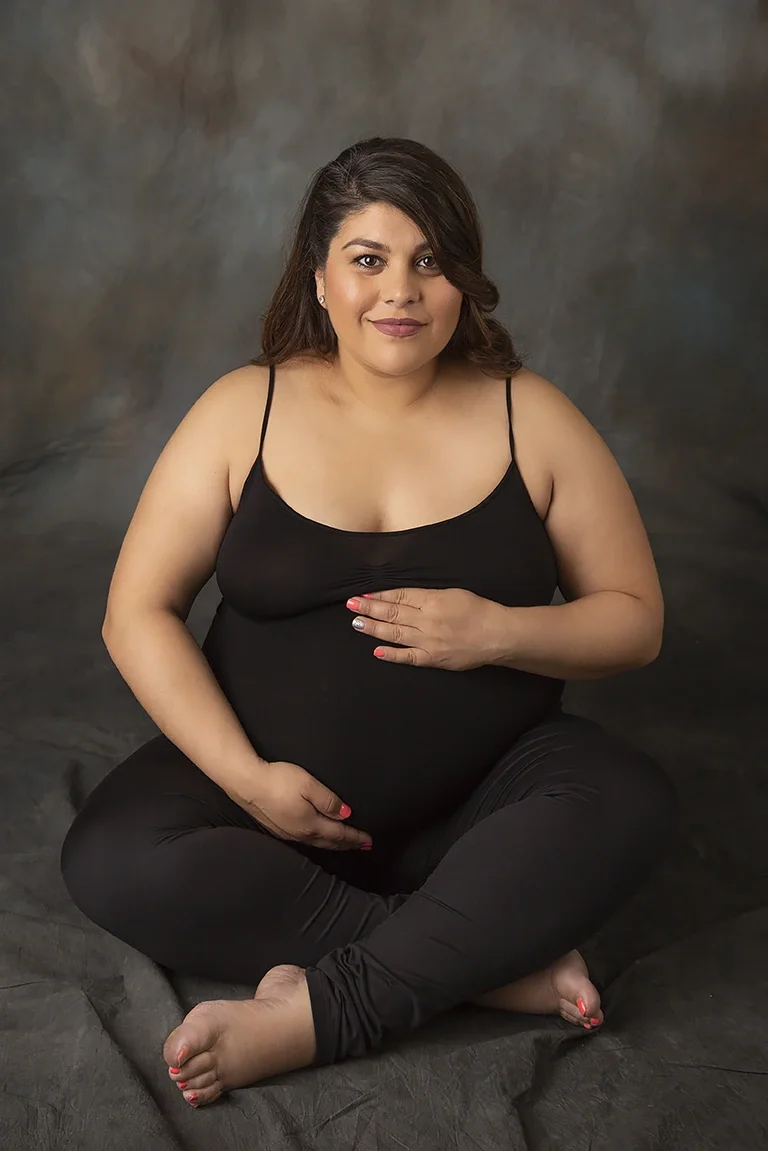
Seated maternity poses can create beautiful, relaxed portraits while giving Mom a break from standing. Careful attention to posture, hand placement, body angle, and camera position keeps the baby bump beautifully defined while creating a flattering portrait.
Quick Answer: Maternity posing is different from regular portrait posing because the goal is not simply to create a flattering portrait of the face and body. The photographer also has to consider the shape of the baby bump, the changing proportions of pregnancy, Mom’s comfort and balance, hand placement, wardrobe, camera angle, and how lighting defines the pregnant form. You do not need to know how to pose before your session. Your maternity photographer should guide you through it.
One of the most common things expecting moms tell me before a maternity session is:
“I don’t know how to pose.”
That is completely fine.
You are not supposed to know how to pose for maternity photographs.
In fact, maternity posing is different enough from ordinary portrait posing that even someone who is very comfortable being photographed may need completely different direction during pregnancy.
The reason is simple: pregnancy changes the shape, proportions, balance, and visual center of the body.
A maternity portrait has to account for all of those changes while still creating a photograph that feels graceful, intentional, and natural to the woman being photographed.
The Baby Bump Changes the Entire Composition
In a traditional portrait, the face is usually the primary visual focus.
In maternity photography, the face is still important, but the pregnancy becomes another major element in the composition.
That means I am constantly considering how the belly relates to:
The shoulders
The waist
The hips
The arms
The hands
The legs
The direction of the face
The camera
The light
A small adjustment to any one of these can change the photograph substantially.
For example, turning Mom slightly away from the camera can help define the curve of the belly. Turning too far may hide it.
Facing directly toward the camera can work for some images, but other poses benefit from a three-quarter or side angle that emphasizes the silhouette of pregnancy.
There is no single maternity pose that works for everyone.
Maternity Posing Is About Shape and Line
Fine-art maternity photography relies heavily on shape.
I am looking at the overall line created by the body, not simply whether someone is standing upright and smiling.
A slight bend in one knee can change the position of the hips.
Shifting weight to one leg can create a more elegant line through the body.
Changing the angle of the shoulders can keep the upper body from looking rigid.
Moving an elbow just a few inches away from the torso can create separation and definition.
These are small adjustments, but they matter.
Pregnancy creates a strong natural curve through the abdomen. Good maternity posing works with that curve rather than fighting against it.
Hand Placement Matters More Than You Might Expect
Hands are especially important in maternity photographs because they frequently frame the belly.
The classic maternity position of one hand above the belly and one below exists for a reason: it immediately defines the shape of the pregnancy.
But that does not mean every photograph needs exactly the same hand placement.
Hands might rest:
Above and below the belly
Along the side of the belly
On the hips
Near the collarbone or shoulder
Holding fabric
Interacting with a maternity gown
With a partner’s hands around the belly
The position of the fingers matters too.
Flat, tense hands can look heavy in a photograph. Softer fingers and relaxed wrists usually create more graceful lines.
These are details I guide during the session. You do not need to remember them.
Weight Distribution Changes During Pregnancy
Pregnancy changes your center of gravity.
That affects the way you naturally stand, walk, sit, and balance.
A pose that feels effortless in a regular portrait may feel completely different when you are 32 or 34 weeks pregnant.
That is why I never want maternity posing to become a test of how long someone can hold an uncomfortable position.
We may shift weight differently, shorten the amount of time a pose is held, or use a chair, stool, wall, or other support when appropriate.
The photograph still needs to look intentional, but Mom’s comfort comes first.
Posing Should Change as Pregnancy Progresses
A woman photographed at 29 or 30 weeks may have more flexibility than she does at 36 or 37 weeks.
Later in pregnancy, standing for long periods may be tiring. Getting up from the floor may be difficult. Swelling or pelvic discomfort may also limit certain positions.
This is one reason I generally prefer maternity sessions around 30–34 weeks.
At that stage, the baby bump is usually beautifully defined while we still have considerable flexibility in posing and creating different looks.
A later maternity session can still be beautiful, but the posing plan may need to become simpler and more comfort-focused.
If you're already later in pregnancy, my Is 35 Weeks Too Late for Maternity Photos? guide explains how comfort, energy, mobility, and posing flexibility can change at 35, 36, 37, and 38 weeks.
Camera Angle Can Change the Appearance of the Belly
Where the camera is positioned matters.
Shooting from slightly above, straight on, or slightly below can change the apparent proportions of the body.
The wrong angle can visually shorten the torso or make the belly appear larger than it needs to.
The right angle can emphasize the pregnancy while still keeping the overall portrait balanced.
This is especially important in close maternity portraits, seated poses, and images where the belly fills a larger percentage of the frame.
Good maternity posing and good camera placement have to work together.
A Side Pose and a Three-Quarter Pose Do Different Things
A side profile is one of the clearest ways to show the shape of pregnancy.
It creates a strong silhouette and allows the curve of the belly to become a major part of the composition.
A three-quarter pose gives us something different.
We can still see the belly clearly while also seeing more of Mom’s face, shoulders, waist, and overall shape.
Neither is better.
They simply tell the visual story differently.
A well-planned maternity session usually includes several angles so the finished gallery does not feel repetitive.
Wardrobe Changes the Way I Pose You
Maternity posing also depends on what you are wearing.
A fitted gown clearly shows the shape of the body, so small adjustments in hips, shoulders, and legs become very visible.
A flowing gown behaves differently. The fabric itself becomes part of the pose.
We may spread the train, lift fabric, create movement, or position the gown to add shape to the composition.
A bare-belly or draped-fabric portrait may require another approach entirely because there is less clothing directing the eye.
The same pose will not necessarily work equally well with every maternity look.
That is one reason wardrobe planning and posing should be considered together.
Bare-Belly Maternity Posing Requires Extra Attention to Lines
When more of the body is visible, posing becomes even more important.
Without a gown providing structure, the photograph depends more heavily on:
Body angle
Arm placement
Hand position
Shoulder line
Leg position
Lighting
Fabric placement
Small changes become more noticeable.
This does not mean bare-belly portraits need to be complicated.
Some of the strongest maternity photographs are very simple.
But simplicity only works when the details are intentional.
How much coverage you choose also changes the way I approach posing. My Bare Belly or Covered? maternity photo style guide explores fitted gowns, flowing fabrics, draping, and more revealing fine-art maternity looks.
Lighting and Posing Have to Work Together
A maternity pose cannot be evaluated separately from the lighting.
The direction of light determines which areas of the body appear brighter and which fall into shadow.
That can emphasize or minimize shape.
For example, side lighting can define the curve of the belly very clearly.
More frontal lighting can create a softer, flatter effect.
Dramatic studio lighting can sculpt the body and create more dimension, while softer lighting produces a different mood entirely.
Sometimes I adjust the pose because of the light.
Other times I adjust the light because of the pose.
The two decisions are connected.
Why I Do Not Ask Moms to “Just Pose Naturally”
“Just stand naturally” sounds easy, but it is not always useful photographic direction.
Most people standing naturally will place their feet evenly, hold their arms close to their sides, and square their shoulders toward the camera.
That may be comfortable, but it does not necessarily create the strongest maternity portrait.
Instead, I give small, specific directions.
Shift your weight here.
Turn your shoulder slightly.
Bring this hand higher.
Relax your fingers.
Drop your chin a little.
Push your hip back.
Look toward the light.
Those adjustments build the pose one step at a time.
You never need to arrive knowing what to do.
Not Every Maternity Pose Flatters Every Woman
A pose can be technically correct and still not be the best pose for the woman in front of my camera.
Pregnant bodies vary tremendously. Torso length, height, shoulder width, hip shape, where Mom carries the baby, the size and position of the belly, and the way pregnancy has changed her proportions all affect how a pose photographs.
That means I do not work from a fixed list of maternity poses and simply repeat them with every client.
Part of my job is evaluating what I see as we work. I may try an angle and decide that another position creates a stronger silhouette. I may change the placement of a hand, adjust the hips, turn the shoulders, raise or lower the camera, or choose a different gown because it works better with Mom's particular shape.
Sometimes the difference between an average pose and a very flattering one is only a few inches.
This is also why copying a maternity pose from Pinterest does not guarantee the same result. The pose that was beautiful for one woman was created around her body, belly, wardrobe, lighting, and camera angle.
Good maternity posing is not about making every woman look the same. It is about recognizing which lines, angles, and positions best complement the individual woman being photographed and adjusting throughout the session.
Posing Should Still Look Like You
Guided posing does not mean every maternity client should end up looking identical.
A pose that works beautifully for one woman may not be right for another.
Height, body shape, belly shape, mobility, wardrobe, comfort, and personal style all influence the choices I make.
Some women look strongest in dramatic full-length poses.
Others photograph beautifully in quieter seated portraits.
Some prefer very feminine styling and flowing fabric.
Others want something simple and contemporary.
My job is to use photographic principles without making every client fit into the same template.
Partner Posing Has Its Own Challenges
When a partner joins the photograph, there are now two bodies to arrange without hiding the pregnancy.
That matters.
A partner standing directly in front of Mom may block the belly.
An arm placed in the wrong position may cut across the strongest part of the silhouette.
If both people are standing stiffly toward the camera, the image may feel more like a conventional couple portrait than a maternity photograph.
Instead, I often use simple interaction:
An embrace from behind
A hand on the belly
Looking toward each other
Foreheads close together
A partner standing slightly behind Mom
Close detail photographs of hands and the belly
The pregnancy remains visually important while the photograph also shows connection.
What About Seated Maternity Poses?
Seated poses can be beautiful, but they require careful positioning.
The belly can compress differently when sitting. Clothing may bunch. The shoulders may roll forward. Legs and arms can also create awkward lines if they are not placed deliberately.
A seated pose may involve adjusting:
The angle of the chair
Mom’s position on the edge of the seat
The direction of the knees
Shoulder posture
Hand placement
The angle of the camera
Done well, seated maternity portraits can feel quiet, elegant, and intimate.
They can also give Mom a welcome break from standing.
Do I Need to Practice Maternity Poses Before My Session?
No.
You can look at maternity photographs beforehand to help identify the kinds of images you like, but you do not need to practice poses in the mirror or memorize where your hands should go.
That is the photographer’s responsibility.
In fact, trying to reproduce a pose exactly from someone else’s photograph may not be helpful because that pose was designed around another person’s body, wardrobe, stage of pregnancy, and lighting.
Reference photographs are useful for communicating style.
They are not instructions you need to memorize.
What If I Feel Awkward in Front of the Camera?
Most people do at first.
A maternity session should give you time to settle into the process.
I generally begin with straightforward poses and gradually refine them. Once you understand the kind of direction I am giving, the process becomes easier.
You are not expected to perform.
You are responding to guidance one small adjustment at a time.
That is very different from being placed in front of a camera and told to figure it out yourself.
Why Professional Maternity Posing Matters
Maternity photography is not simply regular portrait photography with a pregnant client.
Pregnancy changes the way the body balances, the way clothing fits, the way the belly interacts with the rest of the silhouette, and which positions feel comfortable.
A maternity photographer needs to understand how posing, lighting, wardrobe, and camera angle work together.
The goal is not to hide pregnancy or exaggerate it.
The goal is to create a portrait in which the pregnancy is beautifully integrated into the entire composition.
You Do Not Need to Know How to Pose for Maternity Photos
That is the most important thing to remember.
You do not need modeling experience.
You do not need to know your “best side.”
You do not need to practice hand positions.
You do not need to arrive with a list of poses.
Your job is to tell me how you are feeling, what kinds of photographs you love, and what you are comfortable wearing.
My job is to take care of the posing, lighting, camera angle, and all of the small adjustments that turn those decisions into a finished maternity portrait.
Posing is only one part of planning the session. My Complete Guide to Maternity Photography in Los Angeles covers timing, wardrobe, partners, what to bring, studio photography, and the other decisions that go into planning maternity portraits.
Continue Learning
What to Wear for Maternity Photos: Gowns, Fabrics & Maternity Photoshoot Outfit Ideas
See how fitted gowns, flowing fabrics, color, and wardrobe choices affect the overall look of maternity portraits.
Should My Partner Be in My Maternity Photos?
Learn how partner portraits can be planned without losing the focus on Mom, including wardrobe, posing, and how much of the session to devote to couple photographs.
What Happens During a Maternity Photo Session?
See how wardrobe changes, lighting, posing, and different setups come together during a studio maternity session.
Explore Photography Sessions
Maternity Photography
Create fine-art maternity portraits with guided posing, professional studio lighting, thoughtful wardrobe planning, and multiple looks designed around your body, comfort, and personal style.
Newborn Photography
Continue documenting your family's story after your baby arrives with a carefully planned newborn session that can include parent and sibling portraits.