Is My Baby Too Old For Los Angeles Newborn Photos?
Newborn photography is a relatively “new” discipline. The highly stylized poses, wrapping, and props is something that has come about as a genre in the last 20 years or so. But of course, moms have been taking baby pictures for a hundred years. A question I get a lot is “Is my baby too old” to come for photos. The short answer is: No.
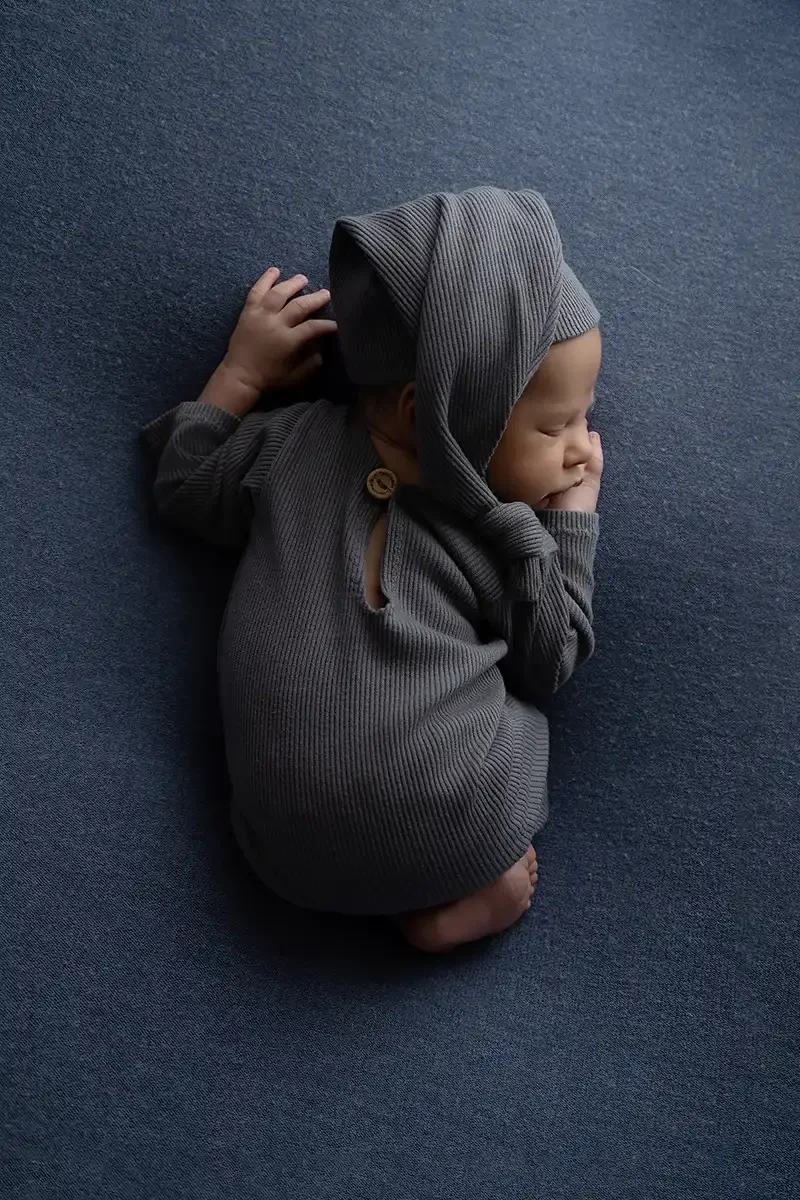
Older newborns can still be beautifully posed when their comfort and flexibility allow. As babies grow, I adapt each newborn session to their age and individual needs rather than expecting every baby to fit the same poses.
Quick Answer: Is My Baby Too Old for Newborn Photos?
Usually, no. Newborn photos are often easiest during the first 7–14 days, especially if you want sleepy, curled, highly posed images. But babies who are 3, 4, 5, or even 6 weeks old can still have beautiful studio newborn photos. As babies get older, they may be more alert and less flexible, so I adjust the posing and use more wrapping, comfortable positions, awake portraits, and parent-and-baby images. There is no single age when a baby suddenly becomes too old for newborn photos; the style of the session simply changes as your baby grows.
One of the most common questions I hear from parents is, “Is my baby too old for newborn photos?” The answer is usually no. You may have heard that newborn photos must be taken within the first 10 to 14 days after birth. That timeframe can be ideal for certain types of posed newborn photography, but it is not an expiration date. Babies do not suddenly become “too old” to photograph at two weeks. What changes as your baby gets older is the type of images we can safely and comfortably create. At my Los Angeles newborn photography studio, I photograph each baby according to their age, temperament, size, flexibility, and comfort. Some older newborns sleep beautifully and allow quite a bit of posing. Others are more alert and prefer being wrapped or photographed awake.Both can result in beautiful newborn portraits.
Why Do Newborn Photographers Recommend the First Two Weeks?
The first two weeks are commonly recommended for highly posed studio newborn photography because younger newborns often:
Sleep more deeply
Stay asleep longer while being positioned
Naturally curl their legs and bodies into womb-like positions
Are usually easier to wrap and settle
Are less alert to movement and activity around them
For parents who want the classic sleepy newborn poses, photographing the baby around 7 to 14 days old often gives us the greatest number of possibilities.But that recommendation is about posing possibilities, not whether your baby is still worth photographing. If your baby is already three, four, or even several weeks old, you have not necessarily missed your opportunity.
What Happens If My Baby Is Older Than Two Weeks?
As babies become more alert, I adjust the session rather than trying to make an older baby behave like a one-week-old newborn. An older newborn may spend more time awake. They may stretch their legs instead of curling them tightly. They may be more sensitive to being moved between poses. Some babies also need more time to settle. That means I may use more:
Wrapped poses
Simple prop setups
Comfortable positions that suit the baby's current flexibility
Awake portraits
Close-ups of the baby's face, hands, feet, and expressions
Parent-and-baby images when included in the session
I do not believe in forcing a pose simply because it appears in a newborn photography portfolio. The better question is not, “Is my baby too old?” It is, “What kinds of photographs are appropriate, safe, and comfortable for my baby at this age?” That is the question that guides my sessions.
Can a 3- or 4-Week-Old Baby Still Have Studio Newborn Photos?
Yes. I regularly approach older newborns differently from babies who are seven or ten days old, but studio photography can still be very successful. Parents sometimes worry because they have read online that they have missed the newborn photography window. In reality, there is no single day when newborn photography suddenly stops being possible. At three or four weeks, your baby's gallery may contain fewer tightly curled poses and more wrapped, relaxed, or awake images. Your baby may also need additional time for feeding, soothing, and settling. That is completely normal. If you are deciding whether it is still worth scheduling a session, you may also want to read Can I Still Take Newborn Photos After 2 Weeks? for more information about what changes as newborns get older.
What About Babies Who Are 5 or 6 Weeks Old?
Full-term babies around five or six weeks old can often still be photographed in the studio, but expectations become especially important. At this age, babies are typically stronger, more alert, and more interested in what is happening around them. They may make eye contact, stretch, move their arms and legs, and stay awake for significant portions of the session. Rather than viewing those things as problems, I incorporate them into the photographs. An alert newborn looking directly toward the camera can make an incredibly meaningful portrait. These expressions are part of who your baby is at this particular stage. Some babies at this age will still sleep deeply enough for traditional newborn poses. Others will not. I never guarantee a particular pose because the baby's comfort and safety determine what we do. You can see more examples of how I approach alert babies in Awake Newborn Photos: What Parents Should Know.
Does the Two-Week Guideline Apply to Premature Babies?
Premature babies need to be considered according to their individual circumstances rather than a strict number of days since birth. A baby who spends several weeks in the NICU obviously cannot be expected to follow the same photography timeline as a healthy, full-term baby who went home shortly after delivery. For premature babies, I consider factors such as the baby's current size, development, medical circumstances, adjusted age, and the parents' healthcare guidance before determining when a studio session is appropriate. There is no photograph important enough to rush a medically fragile baby into a photography session.
Does Preparing an Older Newborn for the Session Help?
Preparation can make a difference, particularly with an older newborn, but I do not believe parents should significantly disrupt a baby's normal feeding or sleep needs simply to make photography easier. I provide preparation information before the session so parents know what to expect. Depending on the baby's age and normal routine, arriving ready for a feeding can sometimes help the baby settle comfortably once everyone is in the studio. But babies are not machines, and newborn sessions cannot be controlled by a preparation checklist. Some babies sleep. Some stay awake. Some want to eat repeatedly. Some settle immediately, while others need considerably more time. My job is to adapt the session to the baby who arrives. For a better idea of how the session itself works, read What Happens During a Newborn Photography Session?.
What If My Baby Doesn't Sleep During the Newborn Session?
This is another common concern, especially with older newborns. Your baby does not have to sleep through the entire session for us to create beautiful photographs. If your baby is peacefully awake, I often photograph those moments rather than spending the entire session trying to make the baby sleep. Open eyes, tiny expressions, stretches, yawns, and curious looks can become some of the most memorable photographs in the gallery. If your baby becomes tired and falls asleep later, we can transition into sleepy or wrapped poses when appropriate. A newborn session is not successful because a photographer completed a predetermined list of poses. It is successful when we create meaningful photographs while respecting what the baby is able to do comfortably.
What If I Want Lifestyle Newborn Photos at Home?
The traditional two-week recommendation matters much less for in-home lifestyle newborn photography. Lifestyle sessions are less dependent on sleepy, curled newborn posing. Your baby may be photographed in your arms, with parents or siblings, in the nursery, or resting safely in familiar surroundings. Because these photographs focus more heavily on relationships and everyday moments, there is considerably more flexibility in when the session takes place. For families deciding between the two approaches, I explain the differences in Studio vs. Lifestyle Newborn Photography in Los Angeles.
What If I Really Want the Classic Curled Newborn Poses?
If those highly stylized, sleepy newborn poses are especially important to you, scheduling early is the best approach.Ideally, contact your newborn photographer while you are still pregnant. The session can then be planned around your due date and finalized once your baby arrives. Younger newborns generally give us more posing possibilities, but even then, no individual pose should ever be guaranteed. Every baby's flexibility is different. I have photographed hundreds of newborns, and one of the most important things experience teaches you is that the baby ultimately determines the session.
So, When Is a Baby Actually Too Old for Newborn Photos?
There is no universal cutoff. Instead, there is a gradual transition from traditional newborn photography into baby milestone photography. A seven-day-old baby, a four-week-old baby, and a two-month-old baby are developmentally different. It would not make sense to photograph all three exactly the same way. As babies get older, the photography changes with them. If your baby is already older than the traditional newborn window, do not assume you missed your chance based on something you read online. The photographer should evaluate what is realistic for your baby's current age and explain what type of session will work best.
The Most Important Rule Is Safety, Not Age
Newborn photography has changed considerably over the past couple of decades. Elaborate wrapping, props, composites, and highly stylized posing have become recognizable parts of modern newborn portraiture. But the purpose of newborn photography is not to make every baby fit the same collection of poses. It is to preserve what your baby looked like during an extraordinarily short stage of life. Sometimes that means a deeply sleeping newborn curled into a tiny pose Sometimes it means a four-week-old baby wrapped snugly and staring straight at the camera. Sometimes it means a parent holding a wide-awake baby who has absolutely no intention of sleeping. All of those photographs can matter. Your baby does not become less photographable because they got older. The photographs simply change as your baby changes.
Continue Learning
When Should I Schedule Newborn Photos in Los Angeles?
Why Are Newborns Wrapped in Their Photos?
Newborn Photography Safety: What Parents Should Know
What Should Parents Wear for Newborn Photos?