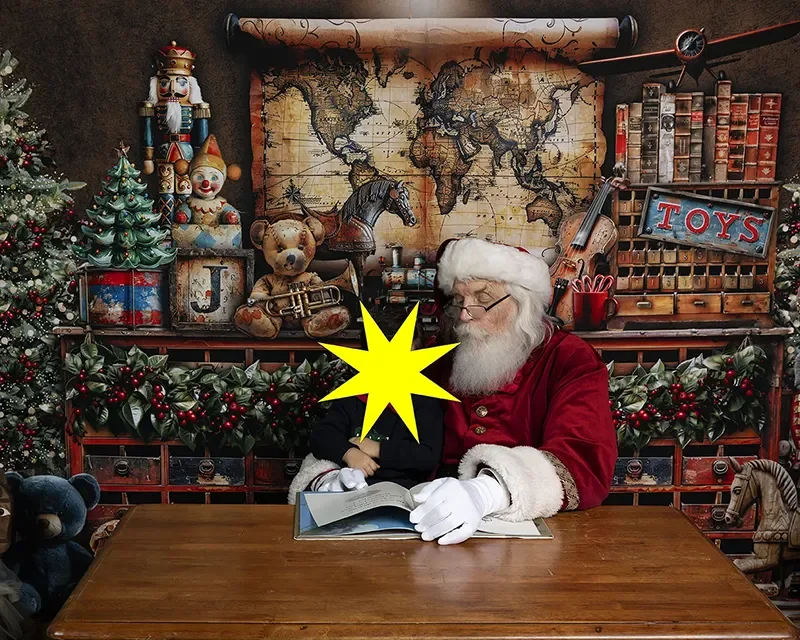
Santa takes the time to slow down. For many toddlers, sitting quietly with Santa while reading a favorite Christmas story feels much less intimidating than being asked to smile for the camera right away. This gentle, shared activity gives children a chance to observe, relax, and build trust at their own pace. By the time the story ends, many toddlers are smiling naturally because they've had time to become comfortable with the experience.
Quick Answer
A happy visit with Santa begins long before your family arrives. Talking about Santa in a positive, low-pressure way, keeping expectations realistic, and making sure your toddler is well-rested and well-fed can make a big difference. It's also important to remember that every child responds differently. Whether your little one runs to Santa with excitement or prefers to observe from a parent's arms, the goal is to create a positive holiday experience while capturing genuine moments that reflect your child's unique personality.
A Parent's Guide to a Happy First Santa Experience in Los Angeles
For many families, a visit with Santa is one of the highlights of the Christmas season. But toddlers don't always share the excitement.
If your child is between one and three years old, they're at an age where strangers can feel overwhelming. A long white beard, a bright red suit, and an unfamiliar environment can make even the happiest toddler hesitate.
The good news is that a little preparation can make a huge difference.
Whether you're visiting a mall Santa or booking a private Santa photo session in Los Angeles, these simple tips can help your toddler feel more comfortable.
Why Toddlers Are Sometimes Afraid of Santa
Fear of Santa is completely normal.
Between 18 months and 3 years old, children are developing a stronger awareness of unfamiliar people. Many toddlers become cautious around anyone they don't know—even friendly relatives they haven't seen in a while.
Santa combines several things toddlers naturally notice:
A large beard
Different voice
Bright clothing
An unfamiliar setting
Expectations from excited adults
None of these are "bad." They're simply new. This is why we make a concerted effort to make your toddler feel at home. Read 15 Ways We Make Santa Real For Your Child
Start Talking About Santa Early
Don't make Santa the surprise of the year.
A few weeks before your visit:
Read Christmas books together.
Watch gentle Santa movies.
Point out Santa decorations while shopping.
Talk about Santa as a kind, friendly person who enjoys meeting children.
Avoid telling your toddler they have to sit on Santa's lap.
Instead, explain that they'll get to meet Santa and say hello.
Removing pressure helps many children feel safer.
Show Real Santa Photos
Toddlers learn through familiarity.
If you're visiting a specific Santa, show your child actual photos of him beforehand.
Say things like:
"This is Santa. We're going to visit him next week."
If you're booking a private Santa experience, this is even easier because many photographers share images of their Santa on their website.
Seeing the same face several times before the visit helps reduce anxiety.
Visit When Your Toddler Is Well Rested
This one matters more than most parents realize.
Try to schedule your Santa visit:
After a nap
After eating
Before your child's usual fussy time
An overtired toddler has a much harder time coping with new experiences.
Don't Build Too Much Anticipation
Parents naturally get excited.
Sometimes we accidentally make Santa feel like a huge event.
Instead of saying:
"You're finally going to meet Santa!!"
Try something calmer:
"Today we're going to visit Santa and say hello."
A relaxed attitude from parents often creates a relaxed child.
Bring a Favorite Comfort Item
A favorite stuffed animal, blanket, or small toy can make children feel much more secure.
Many photographers are happy to include a beloved teddy bear or blanket in a few photos.
Years later, those details often become some of a family's favorite memories.
Let Your Toddler Warm Up
The biggest mistake parents make is rushing.
Many toddlers simply need a few minutes to observe.
If Santa smiles, waves, talks gently, or shows them a toy, children often become curious on their own.
Private Santa sessions are especially helpful because there isn't pressure from a long line waiting behind you.
Children can interact at their own pace.
Never Force Your Toddler to Sit on Santa's Lap
If your child doesn't want to sit with Santa, that's okay.
Some beautiful alternatives include:
Standing beside Santa
Holding Santa's hand
Looking at a toy together
Reading a Christmas story
Sitting on the floor nearby
Sitting safely in a parent's lap while talking with Santa
Some of the most heartfelt Santa photographs happen when children interact naturally instead of posing.
Stay Positive if Tears Happen
Even with preparation, some toddlers cry.
That's okay.
Don't apologize.
Don't tell your child to smile.
Instead:
Pick them up.
Offer reassurance.
Give them a minute.
Let Santa continue talking gently.
Many children recover quickly once they realize there's no pressure. Read Advice From Santa About Toddlers In the Complete Guide To Santa Photos In Los Angeles
Choose the Right Santa Experience
Not every Santa visit is the same.
Busy mall Santa sessions often move quickly because many families are waiting.
Private Santa sessions usually allow more time for toddlers to explore, ask questions, and become comfortable before photos begin.
That extra time can make a big difference for young children who need a slower introduction.
Remember the Goal
Perfect smiles aren't the goal.
Years from now, you'll remember your child's personality far more than whether they looked directly at the camera.
A curious glance.
A shy smile.
Holding Santa's hand.
Looking at a Christmas book together.
Those moments often become the family's favorite photographs because they capture exactly who your toddler was during that magical stage of life.
Frequently Asked Questions
What is the best age to visit Santa?
Many children begin enjoying Santa visits between ages 2 and 4, but every child develops differently.
What if my toddler cries the whole time?
Stay calm. A patient Santa and an unhurried environment often help children settle. Even if they don't, it's perfectly okay to try again another year.
Should I make my toddler sit on Santa's lap?
No. Children should never be forced to interact with Santa. Some of the best photos happen with Santa sitting beside the child instead.
What should my toddler wear for Santa photos?
Comfortable clothing in classic Christmas colors such as cream, burgundy, forest green, navy, or plaid photographs beautifully while allowing toddlers to move and play naturally.