Mommy & Me Photos With Toddlers: What to Expect
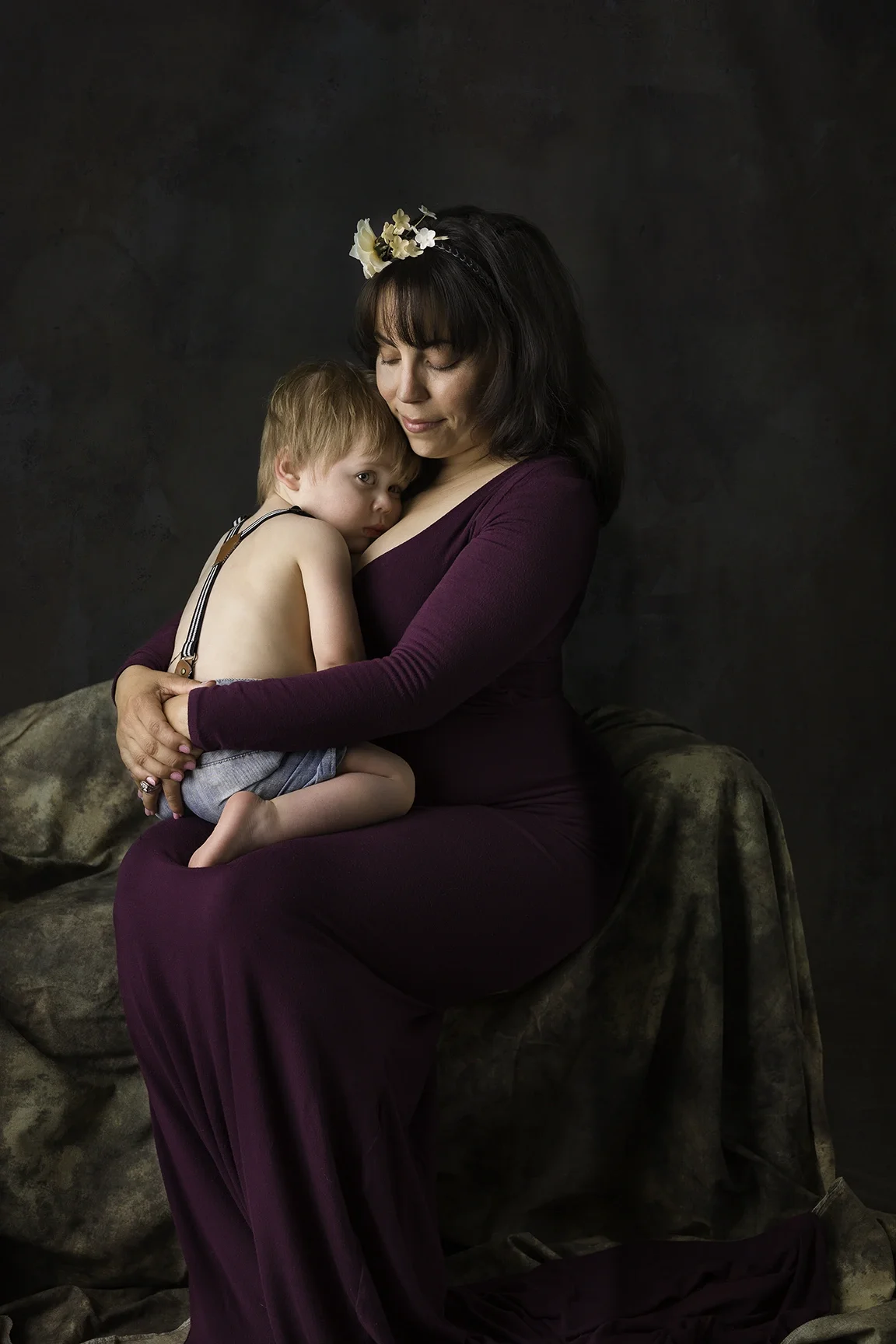
Toddlers do not need to sit perfectly still for meaningful Mommy & Me portraits. Quiet cuddles, being held, and simply staying close to Mom can create some of the most personal photographs from this stage of childhood.
Mommy & Me photos with toddlers require a different approach from photographing babies or older children.
Toddlers move. They change their minds quickly. They may want to be held one minute and explore the studio the next. They may cooperate beautifully for a short stretch, then suddenly have no interest in the pose that was planned.
That does not make toddlers difficult to photograph.
It means the session has to be designed around how toddlers actually behave.
If you are planning Mommy & Me photos with a toddler in Los Angeles, here is what to expect.
What Age Counts as a Toddler for Mommy & Me Photos?
For photography purposes, toddler behavior usually becomes a factor once a child is confidently mobile and increasingly independent.
That may mean walking, climbing, exploring, refusing certain poses, or wanting to control where they go and what they do.
A two-year-old and a three-year-old may behave very differently, but both generally need more flexibility than a sitting baby.
The exact age matters less than the child’s developmental stage.
Toddlers Do Not Need to Sit Still
One of the biggest misconceptions about toddler photography is that a successful session requires a child to sit in one place for a long period.
It does not.
A toddler may stay in a seated pose long enough for several strong photographs and then want to move.
At that point, I may change the setup rather than repeatedly trying to return the child to the same position.
We can photograph:
Mom holding the toddler
Sitting together
Standing together
Walking
Hugging
Playing
Looking at each other
A quick traditional portrait between activities
Close-up interaction
Movement is part of toddlerhood.
The session works better when that reality is built into the plan.
We Usually Start With the Most Important Portraits
When toddlers are fresh and curious, I generally want to use that attention wisely.
If there is a more structured portrait Mom especially wants, it often makes sense to create it early.
That might include:
Mom and toddler looking at the camera
A seated portrait
A standing portrait
Mom holding the child
A formal painterly portrait
Once those stronger structured photographs are created, we can move into more relaxed interaction and allow the child more freedom.
This does not mean the entire session becomes unposed.
It means we use the toddler’s attention strategically.
What If My Toddler Will Not Look at the Camera?
That is common.
Direct eye contact is useful for some portraits, but it is not required for every photograph.
A toddler may look at Mom, lean against her, laugh, cuddle, hold her hand, or become interested in something nearby.
Those moments can create strong portraits too.
Mommy & Me photography is especially suited to this because the relationship between Mom and child is the subject.
We can create a complete gallery without requiring every image to show both people staring directly into the lens.
What If My Toddler Will Not Smile?
A portrait does not need a large smile to be successful.
Toddlers have serious expressions, curious expressions, quiet expressions, and occasionally expressions that make it very clear what they think about the photography session.
That personality belongs in the photographs.
I would rather capture a genuine expression than spend the entire session repeatedly asking a toddler to smile.
Smiles are wonderful when they happen naturally.
They are not the only acceptable expression.
What If My Toddler Runs Away?
Then we work with movement.
The goal is not to chase a toddler around the studio indefinitely, but there are many ways to photograph a child who wants to move.
Mom can hold the toddler, take their hand, sit with them, bring them into her lap, or interact while the child is standing.
Sometimes movement itself creates the photograph.
A toddler walking toward Mom, reaching for her, or suddenly climbing into her lap may create a more meaningful image than the pose we originally planned.
What If My Toddler Only Wants Mom?
For Mommy & Me photography, that can be useful.
A toddler who wants Mom may:
Sit in her lap
Wrap their arms around her
Rest against her shoulder
Hold her hand
Hide against her
Ask to be carried
All of those interactions can become photographs.
The session does not require your child to separate from you.
In many cases, closeness is exactly what makes the portrait meaningful.
What If My Toddler Is Shy?
Some toddlers need time to understand a new environment.
A studio contains unfamiliar lighting, equipment, backgrounds, and a photographer they may not know.
A shy child may stay close to Mom at first.
That is fine.
We can begin with poses that keep the toddler physically connected to Mom and gradually expand the session if the child becomes more comfortable.
There is no need to force immediate independence.
What If My Toddler Has a Meltdown?
Toddlers sometimes become overwhelmed.
They may be tired, hungry, frustrated, overstimulated, or simply finished with a particular activity.
If that happens, the first step is usually to stop pushing.
A short break, snack, water, cuddle, or quiet reset can make a significant difference.
Continuing to insist on the same pose rarely improves the situation.
The session can change direction and return to the original idea later if it still makes sense.
I’ve found that giving children a little time to become comfortable with the studio often makes a noticeable difference. I would rather spend a few
minutes letting a child settle in than immediately push for a photograph. I can’t guarantee this will prevent a meltdown, but it can help mitigate them.
Should I Schedule Around Nap Time?
Yes, whenever possible.
If your toddler normally naps at a particular time, I would avoid scheduling the session during that window.
A tired toddler has much less patience for clothing changes, posing, and unfamiliar surroundings.
Scheduling when your child is usually rested and fed does not guarantee perfect cooperation, but it gives us a much stronger starting point.
Make Sure Your Toddler Has Eaten
A hungry toddler can become an unhappy toddler very quickly.
Before the session, make sure your child has had an appropriate meal or snack.
Bring a simple snack and water as backup.
Choose something that is easy to eat and unlikely to stain clothing, melt onto hands, or leave crumbs everywhere.
The purpose of the snack is to reset the child quickly, not turn the session into lunch.
Bring a Comfort Item if Your Child Uses One
If your toddler has a small comfort item that helps them settle, it can be useful to bring it.
That might be a favorite small toy, lovey, or other familiar item.
It does not necessarily need to appear in the photographs.
Sometimes simply knowing it is nearby can help a child feel more comfortable.
Do Not Over-Prepare Your Toddler
Parents often want to explain the photography session carefully beforehand.
A simple explanation is enough.
You can tell your child that you are going to take pictures together.
I would avoid spending days emphasizing that they must smile, sit still, behave, or listen perfectly.
That can turn the session into something that feels like a test before it even begins.
The less pressure the child feels, the easier it is to work with their natural behavior.
Should I Promise a Reward?
Small incentives can sometimes be useful, but I would keep them simple.
If the child becomes focused entirely on a large promised reward, every photograph can turn into a negotiation about when they will receive it.
A small treat after part of the session may work better.
The goal is to support cooperation without making the reward the entire focus.
Mom Should Stay Calm and Connected
During the session, Mom does not need to manage every expression and movement.
Constant corrections can make toddlers more resistant.
Instead of repeatedly saying:
“Sit still.”
“Look at the camera.”
“Smile.”
“Stop moving.”
I would rather have Mom stay connected with the child and follow my direction.
I will manage the photography.
That allows Mom to remain part of the portrait instead of becoming the person enforcing the session.
What Should Mom Do During the Session?
Depending on the pose, I may ask Mom to:
Hold the toddler
Sit with them
Look at them
Talk to them
Laugh with them
Help guide them back into position
Hold hands
Walk together
Cuddle
Let the child lean against her
Mom’s interaction gives the toddler something familiar to respond to.
That is often far more effective than asking the child to perform directly for the camera.
We Can Use Games and Interaction
Not every photograph needs to be created through formal posing.
Simple interaction can help keep a toddler engaged.
Depending on the child, that might include:
Whispering
Counting
Looking for something
A simple movement game
Hugging
Nose-to-nose interaction
Holding hands
Sitting together
Talking quietly
The activity is not the photograph.
It is a way to create a moment that photographs well.
Formal Toddler Portraits Are Still Possible
Flexible does not mean casual only.
Toddlers can absolutely be included in more formal painterly portraits.
The key is to create the pose efficiently and understand that the child may not remain there for a long period.
A strong formal portrait may come from a very short window.
That is enough.
I do not need a toddler to hold the same expression and position for several minutes.
I need the right moment.
Mommy & Me Photos With Toddlers Can Include Two Looks
My Mommy & Me sessions can include an outfit change, which allows us to create two different portrait styles.
The first look might be more formal and painterly, with richer colors, elegant wardrobe, and carefully directed posing.
The second can be lighter, simpler, and more contemporary.
With toddlers, I generally want to plan wardrobe changes carefully because changing clothing can affect their mood.
If a child dislikes getting dressed or tends to become frustrated by changes, we can plan the session order accordingly.
The wardrobe should support the photography without exhausting the child.
What Should a Toddler Wear?
Toddler clothing should coordinate with Mom while still allowing the child to move comfortably.
Good options may include:
A simple dress
Soft trousers
Slacks with suspenders
A button-down shirt
A textured knit
A simple romper
A coordinated neutral outfit
Avoid large graphics, character clothing, bright logos, and overly complicated pieces.
Also avoid clothing that requires constant adjustment.
If Mom spends the entire session pulling straps into place or fixing an elaborate outfit, the clothing is working against the portrait. Read What to Wear for Mommy & Me Photosand learn how to coordinate clothing for Mom and children, choose colors and textures, and plan two different portrait looks.
Bring a Backup Outfit
Toddlers are unpredictable.
Snacks spill.
Clothing gets wrinkled.
Something may suddenly become uncomfortable.
A backup outfit gives us options.
If you are already planning two coordinated looks, bringing one additional simple backup for the child can be useful.
Barefoot Can Work in Studio Portraits
Shoes are not always necessary for a studio Mommy & Me session.
Depending on the composition and wardrobe, barefoot portraits can feel natural and keep the focus on the relationship.
This is especially useful with toddlers who dislike shoes or become distracted by them.
If shoes will appear in the portrait, choose something that coordinates with the overall styling and does not dominate the image.
What If My Toddler Refuses the Second Outfit?
Then we do not force it.
Two wardrobe looks are an option, not a requirement that overrides the child’s limits.
If the toddler is doing well and accepts the change, we can create both styles.
If changing clothing causes the session to unravel, keeping the child comfortable is more important than completing every planned look.
We can still create variety through posing, lighting, background, and composition.
What If I Have More Than One Toddler or Young Child?
With multiple young children, I do not expect everyone to cooperate at the same moment for the entire session.
We can rotate through combinations.
That may include:
Mom with all the children
Mom with one child at a time
Siblings together
One child taking a break while another is photographed
Traditional portraits
More interactive images
This gives us more flexibility and reduces the pressure on one single group photograph.
What If My Toddler Is Having a Bad Day?
A difficult few minutes do not automatically mean a difficult session.
Toddlers can change quickly.
A child who refuses one pose may happily participate in another.
A child who needs a snack may return completely differently afterward.
A toddler who starts shy may become comfortable after watching what is happening.
The session is not judged by whether every minute went smoothly.
It is judged by the photographs we create.
Toddler Personality Is Part of the Story
A toddler’s personality is often stronger and more visible than it was during the baby stage.
Some children are serious.
Some are affectionate.
Some are active.
Some are cautious.
Some are determined to do everything themselves.
Professional portraits should not erase those differences.
The goal is to create polished, flattering photographs while still allowing the child to look like the child Mom knows.
You Do Not Need to Wait Until Your Toddler Is “Easier”
Parents sometimes consider postponing professional portraits until their toddler is more cooperative.
But the stage will be different by then.
The child who wants to be carried now may soon refuse to be held.
The toddler who climbs into Mom’s lap may become the preschooler who wants to sit independently.
Waiting for easier behavior can mean missing the stage you actually wanted to preserve.
Mommy & Me Photos With Toddlers Are About Relationship, Not Perfect Behavior
A successful Mommy & Me session with a toddler does not depend on perfect cooperation.
It depends on realistic expectations, good timing, flexible posing, professional direction, and the ability to adapt when the child changes the plan.
Some portraits may be formal.
Others may be playful.
Some may show direct eye contact.
Others may capture a toddler wrapped around Mom, holding her hand, or looking up at her.
Together, those photographs document what this stage of motherhood actually looks like.
Planning Mommy & Me Photos With a Toddler in Los Angeles?
Mommy & Me photography with toddlers is designed around movement, short attention spans, personality, and the relationship between Mom and child.
The session can include formal painterly portraits, contemporary images, two wardrobe looks when appropriate, traditional camera-facing portraits, and natural interaction.
The goal is not to make your toddler stop being a toddler.
It is to create beautiful photographs of the two of you while this stage is still here.
Continue Learning
The Complete Guide to Mommy & Me Photography in Los Angeles
Explore wardrobe, posing, ages, babies, toddlers, session planning, and the complete mother-and-child portrait experience.
What If My Child Won’t Cooperate for Mommy & Me Photos?
Learn how sessions adapt to movement, shyness, crying, short attention spans, and children who do not want to pose.
What Happens During a Mommy & Me Photo Session?
See how studio sessions are planned, how posing is directed, and how breaks, wardrobe changes, and child behavior are handled.
Best Ages for Mommy & Me Photos
See how Mommy & Me photography changes from newborns and sitting babies through toddlers, older children, teens, and adult children.
Mommy & Me Photos With a Baby: What to Expect
Learn how mother-and-baby sessions work during the newborn, sitting, crawling, and first-year stages.
Explore Photography Sessions
Mommy & Me Photography
Create professionally styled portraits centered on the relationship between Mom and her children, with flattering posing, professional studio lighting, and both painterly and contemporary portrait options.
Explore Mommy & Me Photography →
Baby Milestone Photography
Document the stages after the newborn period, from sitting and smiling through crawling and the first birthday.
Explore Baby Milestone Photography →