
PPD Getting You Down? Things You Can Do to Help Get Through It

The period following the birth of your child can be filled with countless emotions. Emotions caused by hormones and your situation in life can be overwhelming. Many moms struggle with Postpartum Depression (PPD). PPD can take time to recover from, however something you can do that will help get you through it include taking care of yourself, getting professional help, and building a support network.
Take Care of Yourself
With a newborn and other family responsibilities it can be difficult to have time for yourself. It is important to know that taking care of yourself enables you to take care of others. Take time for yourself to make you feel good. As hard as it can be, taking care of yourself by eating nutritious foods, getting as much sleep as you can, including regular physical activity in your day, and practicing things like meditation can help you manage PPD. You need to know that you are important as an individual and you deserve to feel good.
Get Professional Help
If PPD symptoms last longer than a few weeks or you feel extreme sadness that could lead to harming yourself or others, get professional help. A doctor will give you the resources you need to get started on your path to recovery. Counseling, prescriptions and TMS therapy are a few common treatments for moms with PPD. TMS doesn’t require the use of medication, which means you don’t have to worry about drugs impacting your ability to nurse if you want to. Instead, it is a form of brain stimulation used to help treat depression. Getting professional help with managing PPD can go a long way towards getting you the help and support you need.
Build a Support Network
Humans are naturally social creatures. When you have a baby, it is easy to feel isolated and alone. You are not alone! Receiving social and emotional support from others will help boost your self-esteem, sense of independence, and enable you to better cope with problems. Be intentional about creating positive social interactions with others that can act as a support network for you.
Having a baby is a beautiful experience. However, it also takes a big toll on your physical and mental well-being. You are not broken for feeling depressed. Focus on what brings you happiness and take steps to help get you through this difficult time.
Check out this article on how to help your baby build more confidence!

Things You Can Do to Aid Your Postpartum Recovery

Having a newborn join your family after months of pregnancy, doctor visits, taking care of yourself, and all the other genuinely exhausting things that come with pregnancy, you might think that the joys of motherhood will carry you through the next few years. But if you are like many new mothers out there, you may feel different after giving birth. Postpartum recovery is a challenge all in and of itself, it takes time for your body to return to a state of new normal after nurturing a growing human inside of you. Here are three things you can do to aid your postpartum recovery and get back in action before you know it.
Stock up on Supplies in Advance
The first thing that you can do to aid your postpartum recovery is to stock up on supplies in advance. Once your child is born, you will find that every single waking hour, and often a majority of sleeping hours, are dedicated to caring for your newborn. This makes routine trips to the store for supplies difficult if not impossible. If you can, you should start stocking up on supplies for postpartum recovery during the final month of your pregnancy. You will need things like pads, disposable underwear, nursing pads, numbing spray, and a peri bottle almost right after birth to ease things along.
Be Mindful About What You Consume
There are a lot of dietary and consumption restrictions that you will face when you are pregnant. Unfortunately, those don’t really end after giving birth, they just change a little bit. You should make sure you still focus on eating a healthy and balanced diet to ensure that you are healthy and energized after birth. A nutritious diet helps you feel so much better, which is especially important during the postpartum period when it’s hard to feel like yourself for a time. And don’t forget to drink plenty of water.
Care for Your Mental Health
Postpartum depression is no joke, it is a real and difficult aspect of the postpartum phase that women everywhere are challenged with. Don’t feel like you must brush it off as no big deal – it is certainly a big deal. Don’t shy away from acknowledging how you feel and even seeking the help of a mental health professional to help you find ways to cope and carry on, regardless of what you are thinking and feeling. You are not alone.
Giving birth is a huge life event that changes everything about how you live. While this can be exciting, it can also be a time of great stress, pain, and recovery from the pregnancy stages. Follow these three tips to make sure that you are recovering during postpartum to the best of your ability.
Check out this article all about the things you can do to start feeling like yourself again after the baby is born!

How to Help Your Baby Build More Confidence

Babies are so fun to have around, and such a joy in their parents’ lives. Though they’re wonderful, of course, babies are also a lot of work. They have so much to learn and need to grow in so many ways, but they don’t have a paid, professional teacher. Rather, they have you, so it’s important to do your best by them. From a very young age, they learn so much from you, including how to feel inner confidence, so start now to teach them!
Introduce Them to New Environments
The first thing you can do to help your baby grow in confidence is to introduce them to new environments. So, as they grow a little older, you can help them build confidence by helping them realize they can thrive in new environments as well. To do so, try your best to keep other constants in their lives. It’s equally important to recognize that babies need stability. According to Parent Lane, they love familiarity and thrive when they have routines. Maybe take them to a new location but bring some people they’re already familiar with. Furthermore, in the new environment, try putting them down for their naps at the same time you normally would if you were at home. These simple acts can be extremely beneficial in helping your child feel comfortable in a new environment, and consequently in helping them feel more confident at all times with their surroundings.
Teach Them Useful Skills
Another great way to help your baby build confidence is to teach him or her new skills. One skill that’s both confidence-building and safety-ensuring is swimming. Many child deaths occur each year due to drowning—mostly during the summertime. Furthermore, swimming is an independent sport that will likely be scary to your child at the beginning, but that will help them realize they can do hard things. Don’t worry about putting your child in swim lessons too early. According to SwimJim, even babies are capable of learning swimming skills. So, teach your child lifesaving and important skills early on!
Provide Safety and Love
Lastly, one very important thing that will greatly help babies grow in confidence is to provide them with safety and love. As mentioned previously, babies love familiarity. Familiarity helps them feel safe. So, hold them and talk to them frequently. Zero to Three recommends you let your loved ones hold them as well so they can become familiar with them. When your baby is crying, don’t just let them cry. Pick them up, comfort them, and try to figure out why they’re crying. Granted, there are times as the baby gets older when it’s good for them to just be left alone to do things like fall asleep. However, especially when they are infants, crying likely means something is wrong and they need to be comforted.
Children are a wonderful addition to a family. They often help both your family and your community. Babies are also a lot of work, of course, and need to learn many skills. So, do some research to see how to best help your child learn. Help them build confidence. And of course, treat them with great love and adoration.
Read this next: 3 Practices Every New Mom Should Start as Soon as Possible

How to Get Your Child to Adopt Healthy Habits
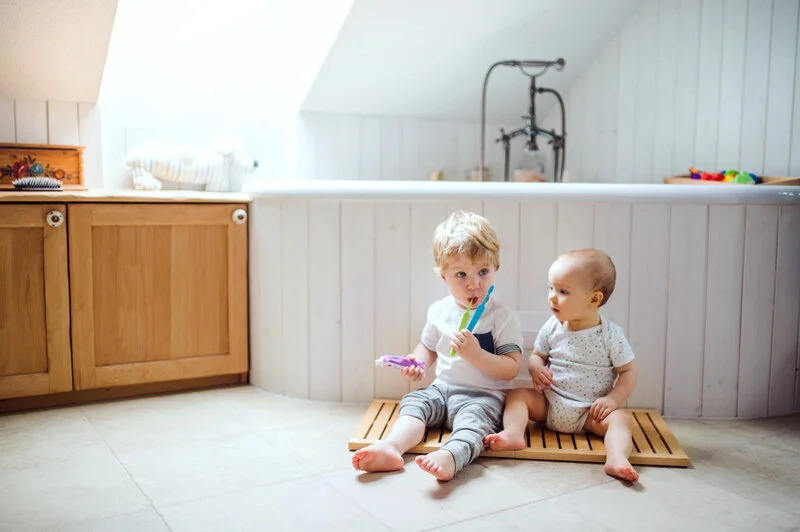
Every parent wants the best for their child. This includes the best health, the best education, and the best experiences. Part of receiving the best starts with teaching your child healthy habits, which lead to a healthy lifestyle and the achievement of the best things life has to offer. Get your child to adopt healthy habits by implementing the following tactics!
Offer Small Rewards
Offering small rewards to your child helps them feel recognition and direction. According to Leading Turtle, rewarding good behavior tells your child that you are pleased with their efforts and encourages them to continue those habits. You can also implement a tangible reward system like a sticker chart to help them achieve goals. Goal achievement leads to confidence and the establishment of healthy habits. Rewarding your child does not have to be a sweet treat, however. Intangible rewards are often better, like playing with toys or doing activities together to celebrate their wins.
Model Good Behavior
Your child’s first teacher in this life is you. Whether you realize it or not, your child is watching much more than you think. If you want your child to adopt healthy habits, you must model good behavior. According to Showtime Smiles, babies and children are more likely to enjoy brushing after seeing you do it. As another example, at the dinner table they’re more likely to eat the foods you put on your own plate, including vegetables. When you put physical exercise, nutrition, and education as a priority in your life, your children are much more likely to follow.
Manage Screen Time
Studies have shown that excessive screen time leads to sleep problems in young kids. Too much screen time also creates a sedentary lifestyle and limits a child’s creativity. Teach your child to adopt healthy habits by managing their screen time. Avoid looking at screens with your child at least one hour before bed as the blue light will make it harder for them to sleep. According to All 4 Kids, video games, TV shows, and smartphone apps all fall in the technology consumption category. Encourage your child to play outside or participate in various activities to keep screen time at a minimum.
For the first few years, your child’s life centers around you. You are their greatest role model and the most important teacher they will ever have. Set your child up for success with a healthy lifestyle by encouraging them to adopt healthy habits early on.
Read this next: How to Stay Calm as a New Mom

3 Practices Every New Mom Should Start as Soon as Possible

Every new parent has a list a mile long of things they know they’re planning to do as their children age. Their family has a lot of fun to look forward to! It can be complicated to figure out how to establish those things as children age, though. What kinds of practices should families begin, even as they are just beginning? Here are a few ideas to get you started.
Create Traditions
Families love to establish traditions, especially for holidays. This can get overwhelming, of course, as you mix things which each partner’s birth family did growing up. It’s perfectly fine and normal to get rid of any traditions which no longer suit your home. You don’t have to, for example, always have to make hundreds of cookies to decorate, unless this causes you joy! If something else like getting Thai food on Christmas Eve rather than decorating cookies brings you more joy, do that instead! Traditions are made to serve YOU, not the other way around.
Set Up a Daily Routine
Setting up daily routines for hygiene and bedtime will help your children immensely. According to Stellar Family Orthodontics, poor oral health during childhood is one of the leading causes of crooked teeth in adults. Likewise, you want children to go to bed on time and with the least amount of stress as possible. Establishing routines can be complicated for non-neurotypical children, and it’s important to not be angry at yourself if you have problems with bath times or potty training. Routines occur bit by bit, and need tweaking to fit the needs of each family.
Establish Boundaries and Consent
According to Evolve, establishing healthy boundaries and encouraging body consent with children helps both them and you considerably. When they have choices in what they eat, wear, and do to a certain extent, small ones feel more confident and securely attached. Likewise, when they learn they have the right to refuse kisses, hugs, or other contact as toddlers, this knowledge continues when they are teenagers and adults, which you very much want!
Look: you’re not going to do any of this “correctly,” but there is no perfection in parenting. Do your best and regroup when you must. Traditions, routines, and even boundaries don’t need to be done perfectly to make your world better!
Read this next: Childhood Habits You Should Help Your Child Break

What You Should Start Doing When Your Baby’s First Teeth Come In

Having a new baby is one new thing after another and learning things while practicing all of the other things, too! One of those new things, at about six months, is the adventure of your baby both cutting new teeth and you caring for the ones your baby is getting! Between sore gums and teaching the baby to not bite fingers (or more sensitive areas), it’s important to also care for those new chompers. What should you do when your baby’s first new teeth come in?
Introduce New Foods
Before the six-month mark, according to the CDC, your baby needs no solid foods, and, indeed, their bodies might not be ready to process them! Advice from decades past said to give formula-fed babies solids as early as three or four months, which now they know can cause food allergies. Practice new foods gradually, with only one new food per week, leaving high allergen foods like peaches, apricots, and strawberries until later. Nursing babies don’t need to begin solids in earnest until a year but starting them at the same time is fine.
Start Brushing
According to Maccaro Smiles, children under two should use toothpaste without fluoride. Although you might get bit, using a finger brush is a great way to get your baby accustomed to having their teeth cleaned. Likewise, it’s common to use a washcloth with a little water on it and the paste. Get a paste your child enjoys the flavor of—if you find your child is not enjoying the idea of clean teeth, they might not like the flavor you’ve chosen.
Find a Great Dentist
Finding a good pediatric dentist for your child is important! If you have a rowdy kid, their baby teeth can get some wear and tear, especially after they learn to walk. Some children can have more predisposition to cavities, too. According to Parents.com, teaching them that going to the dentist is something families do to help their teeth is a great thing. They can sit on your lap at your dental appointment for a cleaning. This normalizes healthy teeth care.
Your baby’s baby teeth are adorable. You want them to be able to enjoy them until they get exchanged for adult teeth, beginning at the age of five or six. Brush them up with no fluoride, teach them about healthy foods, and find that awesome dentist. Don’t forget to bask in that beautiful little baby smile!
Read this next: Childhood Habits You Should Help Your Child Break

How to Stay Calm as a New Mom

Life as a new mom is exciting and wonderful, but it can also be incredibly stressful and riddled with anxiety. Staying calm is harder than it seems, but if you focus on what’s important and get help when you need it, you can make it happen. When you find ways to ground yourself in motherhood you can maintain a calm demeanor and handle all the things motherhood sends your way.
Take Care of Yourself
Motherhood requires a lot of selfless work, but that doesn’t mean you should put yourself and your own needs to the side. Taking care of yourself is essential to remain calm and collected as a mother. Make sure that you give yourself time to relax and take care of yourself so you can feel comfortable and happy. Taking steps to get enough sleep will help you to decrease your stress and manage the difficulties of motherhood more effectively. According to Kaiser Permanente, you should take time to do self-care as well and treat yourself so you can be pampered while you also deal with the difficult aspects of new motherhood.
Do Things That Spark Joy
While you can get a lot of joy from motherhood, it shouldn’t be the only thing that sparks joy in your life. If it is, life can get overwhelming and it can be difficult to stay calm and get things done. Taking time to do the things that bring you joy will help you to be a better mother and a happier person. According to Beyond Yoga Retreat, yoga is a great way to lower stress and improve the mind/body connection. Anything that brings you real joy can help you to find peace in your life as a mother.
Ask for Help When You Need It
Needing help is totally normal, but sometimes new moms forget that they don’t have to do it all on their own. According to Motherly, you should reach out to your network so you can have time to take a break and get help with your baby, your work, or things around the house. The people around you want to help you and reaching out to them for help is mutually beneficial. You should never need to handle all the stress of motherhood on your own.
Being a new mother is a lot of work, but it is important to make sure that you take care of yourself. That means doing things you love and asking for help when you need it from the people who care about you. When you are taken care of it will be much easier to stay calm, even when motherhood gets hard.
Read this next: How to Have Fun and Stay Healthy With Your Kids This Summer

How to Make Learning to Swim a More Enjoyable Experience for Your Child

Knowing how to swim is one of the most important skills a child can learn—if they are unable to keep their head above the surface, any body of water becomes a serious hazard. Unfortunately, many kids struggle to get over their fear of swimming or their aversion to being forced into a “lesson” of any kind. Here are a few things you can do to make swim lessons a much easier, more enjoyable experience for your child (and for you!).
Examine Your Attitude
Children pay attention to the attitudes and moods of their parents. If you feel apprehensive or bothered by swimming, they will too. Show excitement over their learning, and emphasize the fun things they will be able to do once they are strong swimmers to keep them motivated. Validate their concerns, but share the good experiences you have had personally as you learned and developed your swimming skills. Your kids will reflect your positivity and determination to gain this skill.
Choose a Program Carefully
People in general, whether children or adults, learn to swim best in a safe, comfortable environment. Find a program that tailors best to your child’s needs and your accessibility. Consider private lessons for a child that is especially nervous about water, or rambunctious children that need focused attention. Or, if your child thrives in social environments with a healthy amount of competition, a group lesson may be a great fit. The pool itself may also be a factor—private pools might offer an added level of comfort, privacy, security, while public pools may increase the amount of energy your child feels in regards to swimming. Look into the credentials and reputation of the teachers or programs you’re considering to assure that they are trustworthy enough to teach your child.
Reward Their Hard Work
Positive reinforcement is the best way to keep kids excited about coming back to their swim lessons. Whether it be verbal compliments or encouragement, a physical reward like a treat, or an activity they have to look forward to, reward your child’s hard work by allowing them to identify and feel their success. If possible (or appealing to you and your child) find a way to involve swimming in their reward! Going to a special pool or beach to let them show off their skills will motivate them and reinforce the excitement of this life skill.
Be positive, be careful, and be a source of motivation for your children’s experience in swim lessons. They will respond and learn significantly better with this kind of help from you!
Read this next: Baby Behaviors Your Child Should Leave Behind as a Toddler and How to Help

Childhood Habits You Should Help Your Child Break

Parenting your kids can seem challenging enough. Helping your children break bad habits can be especially challenging though. One of the best ways to help children break bad habits is to know the signs of one forming and then to stop it before it becomes too serious.
Nose Picking
Nose picking is one of the most common habits that children develop and it’s essential to help them break it quickly. According to Develop Good Habits, not only is nose-picking unhygienic and can spread germs, but it also tends to be a major turn-off for a lot of people. Because shaking hands is such a common form of greeting, recognizing someone as a nose picker makes certain common conventions of interaction uncomfortable.
Help your child learn to use tissues instead of their hand. You can also help prevent this issue in the first place by giving them saline drops to use in their nose. Saline drops will keep the nose moist which prevents uncomfortable boogers from developing in the first place.
Sucking Their Thumb
Sucking their thumb is a habit that kids tend to develop when they’re really little. Usually, children develop this habit while toddlers as a way to cope with the end of breastfeeding and as a form of comfort. Sometimes parents fail to stop children from becoming attached to this habit because they see it as somewhat cute or enduring.
But sucking your thumb can have really bad issues down the road. According to Stellar Family Orthodontics, sucking your thumb can cause teeth issues, which may require treatment to fix.
Biting Their Nails
Nail-biting is a common habit that kids can develop young. Unfortunately, it is a habit that can stick if not stopped early on.
According to Kid Companions, one of the best things you can do to help your child stop biting their nails is to help them recognize what makes them feel stressed or nervous. Then talk about how that prompts them to bite their nails. Helping them identify the cause of their stress may help them figure out how to cope with it differently.
These bad habits are just a start to some of the negative habits that your child may start to develop. And while preventing these habits is typically the best way to avoid the pain and problems that can occur as a result, it’s also important that you have a plan to address bad habits if they arise. Be vigilant about recognizing when your kids start to adopt new quirks and help them learn to cope with stress and strong emotions healthily.
Read this next: 3 Tips for Making Sure Your Baby is Eating Enough

3 Tips for Making Sure Your Baby is Eating Enough

The amount your baby is eating can be a source of a lot of stress for mothers; wondering if they’re eating enough to be growing at the proper pace, feeling nervous about them receiving enough nutrients to help their immune systems and general anxiety over whether or not the mother is feeding them correctly. Here are three tips that will assure your baby is eating enough to receive all those things it needs!
Have a Schedule
At first, your baby will need to be fed very frequently, so don’t panic if you feel like your baby never stops eating. It is normal for babies to be fed between eight and ten times per day or roughly every four hours. As the baby grows, the time gaps between feedings will grow, meaning you won’t have to feed them as frequently. According to Motif Medical, you should take note of patterns when your baby becomes fussy and wants to be fed. Continue to create a consistent schedule of feeding times. This will help both you and your baby to develop a mental and physical readiness for feeding time.
Watch for Problems
Be aware of any changes in that pattern you have noted as to your baby’s feeding habits. If your baby begins to struggle with latching or with feeding for as long as they usually do, consider seeking help from professionals like doctors and lactation consultants. According to Stellar Kids Dentistry, having issues with breastfeeding is normal, especially if your baby has any kind of lip or tongue restriction. This is something a doctor can help fix. Don’t be afraid to ask for help! You have resources to ease the stress and frustration of feeding issues that you will not regret using.
Pay Attention to the Times Between Breastfeedings
There are some useful indicators of your baby’s milk intake in between the feeding process. Wet diapers mean they are swallowing their milk well. According to University Hospitals, if the baby is sleepy and content after feeding, their belly is likely full and satisfied. If they are following the feeding schedule you are trying to create, that is another good sign that their bodies are ingesting and digesting regularly. Finally, if you notice that your breasts do not feel as full as they did before the feeding, you can feel confident that your baby got the milk it needed.
Creating a schedule, being wary of feeding issues, and looking for signs that your baby is feeding normally can help reduce the stress that comes with constantly wondering if your baby is eating enough. If you continue to have concerns about your child’s eating habits, consult a doctor for more specific tips.
Read this next: Things You Can Do to Start Feeling Like Yourself Again After the Baby Is Born

Baby Behaviors Your Child Should Leave Behind as a Toddler and How to Help

Babies can be a bundle of joy, and watching them grow and develop can be nothing short of wonderful. One of the natural, though bittersweet parts of being a parent is watching your children outgrow some of those delightful baby behaviors. Some of those behaviors can be more difficult to leave behind than others though, and may need a little extra help from you.
Separation Anxiety
As your baby gets older, you may start to notice them becoming a little more clingy and less comfortable around strangers, especially when you’re leaving. According to Baby Center, this separation anxiety tends to peak around 10-18 months and is perfectly normal. In fact, it’s an indicator that you’ve developed a healthy bond with your child. As your child advances further into toddlerhood, however, they should start leaving separation anxiety behind. You can help your child by keeping things as structured and stable as possible when you leave. Try to have a regular caretaker who cares for your child while you’re gone. Avoid the temptation to make a big deal about leaving. If you make a fuss, your child will be more convinced there’s a reason to worry and be upset.
Using a Pacifier
Pacifiers are great for soothing your child as a baby. It’s perfectly natural and normal for them to rely on them for a time. If done for too long, however, behaviors like using a pacifier and thumb sucking can cause problems for the physical development of your child’s teeth and mouth. According to Stellar Kids Dentistry, kids often wean themselves between 2-4 years old, but some may transition from a pacifier to their thumbs instead of quitting altogether. You can try helping your child wean off of a pacifier by gradually increasing the time they spend without it or limiting it to times when they need a little extra comfort. Transitioning to a different comfort item may help as well.
Needing You in the Middle of the Night
Perhaps one of the things you’re looking forward to the most is getting back to getting a solid night of sleep. The good news is that as your child leaves babyhood behind they shouldn’t really need you as much in the middle of the night. While they don’t need nighttime feedings anymore, some children may use that time in bed to practice new milestones. Some even may get stuck standing up because they don’t know how to sit back down yet. Sometimes self soothing after waking up at night is a challenge too. Teaching your child to self soothe and how to sit down can help them need you less in the middle of the night and get you back to sleeping at night sooner.
Babies are wonderfully adept at adapting and developing as they grow. Behaviors such as separation anxiety, using a pacifier, and needing you in the middle of the night are just a few examples of behaviors that they should leave behind as they go through toddlerhood. While you may look forward to certain milestones more than others, make sure you take the time to enjoy where your child is at this moment. Time flies, and your child won’t be so little anymore before you know it.
Capture the fantastic memories with your child with a mother and child portrait experience!

How to Have Fun and Stay Healthy With Your Kids This Summer

The sun is staying out longer. You can feel the warmth on your skin. You’re ready to enjoy your summer. While summertime brings with it opportunities for fun and relaxation for you and your kids, you’ll only be able to maximize those opportunities if you are prepared.
Help Them Stay Active
According to the National Institute of Diabetes and Digestive and Kidney Diseases, staying active is the key to staying healthy and happy for a lot of people. But when it comes to staying active, it’s important to remember that staying active can look vastly different for different people. Find the right balance for you and your kids. You may prefer yoga while your kids prefer running or playing soccer or basketball.
Find a way to accommodate these different preferences—going to the park together can be a great way to do this. You can coordinate with the mothers of your children’s friends to meet up at the same time so your kids can play, giving you time to be active in your own way.
Make Sure They Drink Water
Staying active, enjoying the outdoors, and having quality family time are all well and good things. But if you don’t stay hydrated, you could be in for some serious problems. According to Stellar Kids Dentistry, dehydration causes a variety of short-term problems. You could have headaches, dizziness, and sometimes nausea. Over the long term, it can cause other problems. For example, dehydration can cause dry mouth, which can lead to cavity-causing bacteria.
Balance Indoor and Outdoor Time
During the summertime, it’s easy to simply let your kids play video games, board games, or other games with toys inside. But while they need to engage in these kinds of activities, you should also try to make sure that your kids get enough time outside.
According to Intoxicated on Life, being outside has so many great benefits. For one, being outside for at least an hour a day can greatly improve mood. Also, being outside and getting fresh air is good for the body. Finding the right balance for your kids and family will take some time so that kids don’t get too stir crazy or too sunburned.
Summer is an exciting time for everyone—for your kids who don’t have school and for you to be able to enjoy some beautiful weather. But without careful preparation and planning, you may be disappointed in your summer. Making sure to keep tabs on your and your kids’ health while doing summer activities will help everyone have a positive experience.
Read this next: How to Get Your Baby to Experience Outdoor Activities

Things You Can Do to Start Feeling Like Yourself Again After the Baby Is Born

Having a baby is one of the most important milestones of your life. And while having a baby brings so much joy in your life, it also upsets your routine and may leave you feeling less like yourself. Taking advantage of different moments and opportunities can help you re-find that self that you may be missing.
Take a Shower
According to Rheem, taking a shower can be a huge relief and a chance to spend some time all by yourself. Showers have so many incredible benefits. The heated water hitting your skin stimulates your skin and sends signals to your brain to calm your body.
The time by yourself can also allow you to think without having to be constantly watching the baby. Take advantage of this time to practice different calming breathing strategies as well as other meditation practices.
Get Your Hair Professionally Done
Having your hair done by a professional can help you feel beautiful and taking the opportunity to get pampered can be wonderfully relaxing. The scalp massage you get will provide you a little relaxation that can help you recharge for the rest of the week.
Getting your hair done professionally is also great after birth because your hair may have changed through pregnancy. Luckily, according to Blake Charles Salons, hairstylists are trained to know what types of hair products work well with different types of hair. They’ll not only know how to best help you with your particular hair type, but they’ll also be able to tailor the products they use to your situation as a new mother.
Sleep
Sleeping is beneficial no matter what period of life you are in. But after you’ve had a baby, according to Gruit Day, you will likely need good quality sleep more than ever. And with a newborn who will most likely not be able to sleep through the entire night, plan to have help when it comes to your sleep schedule.
See if your mother, mother-in-law, or a trusted friend can come help out with the baby at night. Giving yourself these opportunities to catch up on sleep will make a big difference in your energy levels and consequently in your feelings about yourself.
Navigating your sense of self after having a baby is difficult. You’re a mother now! But how do you incorporate that into the person you’ve always been? Taking the time to enjoy the little things can help.
Read this next: Creating A Nursery You'll Actually Love

How to Get Your Baby to Experience Outdoor Activities

Spending time outdoors can be very beneficial to your baby now and in the future. Now, your baby can spend time in the fresh air and sunlight which is good for their health. Getting them used to spending time outdoors can encourage healthy habits in the future. If your baby is healthy, it should be safe to take them outside every day for roughly 30–60 minutes.
Go to the Park
When you go to the park, you have the opportunity to give your baby some outside time and they can develop important skills in a whole new environment. For starters, the park provides your baby with a whole new sensory environment. Depending on your baby’s developmental stage, you can allow them to explore. You can start off simple by letting them sit in the grass or even wood chips. If they are capable, you can allow them to climb on small obstacles. A very popular activity for your baby is the baby swing. Just make sure your baby can sit up when using the swing.
Take Them Swimming
You may be hesitant to take a baby to the pool, but it can be very beneficial to their development. Swimming allows babies to develop their muscles as well as heart strength and lung capacity. Starting your baby off early can help them become more accustomed to the water and not be fearful of it in the future. Swimming lessons are something that even babies can take. Babies are born with the instincts to swim and lessons can help them develop these instincts. When you take your baby swimming, make sure you are always watching them and taking care of them. Be aware of how long they’ve been in the sun and make sure they don’t get too cold.
Go for a Walk
Going for a walk can create a whole new experience for your baby. First of all, it helps them experience the world as they have new things to see, hear, smell, and touch. This can help them begin to process new things. If you take your baby out in a stroller, they can begin to develop their independence because they are perceiving things on their own. Some studies have also shown that going for walks in a stroller helps babies sleep independently.
As much as you may want to keep your baby all to yourself, they need to experience the outside world. It can be helpful to their overall development. Find some activities that you would be comfortable with that will allow your baby to experience the outdoors.
Read this next: What New Mothers Should Stop Feeling Guilty About

Activities Your Kids Should Experience Early in Life

Childhood should be a time where memories are made that last for a lifetime. As a parent, you can facilitate activities for your kids. Through the activities your kids are involved in, you can help ensure that your kids will be well-rounded adults.
Reading
Storybooks have the power to teach kids how to channel their powers of imagination. You can help your children develop a love of learning and reading by taking time to read books to them. Young children also crave time with their parents, especially if the parents work full time. By designating time each night with your child, they will have something to look forward to. If your child is still learning how to read, you can read along with them and help them learn how to pronounce and understand words. You can share books with them that you read as a kid and continue to bond with your child over similar interests. Children who read often also do better in school as well.
Swimming
Going in the water is a great experience for children because they can experience a new environment. When kids swim, they have all the benefits of physical activity. They will gain stronger hearts and stronger lung capacities. If your child enrolls in swimming lessons, they will also be able to experience the camaraderie that comes with working towards a common achievement as they are all learning to swim as a team. Swimming lessons can even be valuable for babies. Babies have a natural ability to swim and be underwater and when you put them in lessons, it helps them learn how to swim in an environment that they are already comfortable in.
Playing
Another valuable experience for children is simply interacting with other kids their age. Children need to learn social skills when they are young. They need to learn how to make friends and communicate with one another. This is particularly important if you only have one child because they will not get those interactions anywhere else. Playing with friends gives kids an opportunity to expand their creativity as well. Kids need to feel part of a group when they are young, so they do not feel isolated.
Every kid’s childhood is different, but at the end of the day, kids can all benefit from the same types of experiences. The more positive experiences a kid has while they are young, the more likely they are to be able to deal with hard times when they are older.
Read this next: How to Give Your Children a Good Start in Life

Creating A Nursery You'll Actually Love
Planning your baby’s nursery can be one of the most exciting milestones when you’re expecting. However, spending hours on Pinterest and Instagram trying to decide on the perfect style for your soon-to-be nursery can be equally overwhelming. That’s why we reached out to the experts from Miami to Sacramento to help homeowners design the perfect home nursery for their new or expected child. So, read on and learn how you can properly prepare for your kiddo-to-be.
Make a plan and stick to it
The best tip I can give to expecting parents who are in the nursery building phase is to establish a vision for the space and to stick with it. It's easy to get distracted with a million different ideas and themes and let's face it, it's overwhelming. I say start small and build up to more. A dream nursery doesn't have to be an overnight assignment. You should take some time to live in the space and let certain ideas breathe before you pull the trigger. The one thing you can never be too overboard with is being practical and creating a space that can also be functional. If you're struggling with finding a vision, focus your attention on getting an organized system in place instead. Ask yourself, "How can I maximize the space in this room?" The truth is, you will get inspired as you organize. Chances are your baby is going to have so many gadgets and gizmos so creating a system that will be easy to keep up with when the baby arrives will make the rest of the decorating process feel less intimidating. Bring out the necessities and stow away the other stuff for later (or never) and watch how much that will inspire your vision! Once you know your vibe, vision, or theme - go on Pinterest for inspiration. You'll find so many fun DIY's and products that might work really well for your organized nursery space! - Sazan
Keep it playful, but calm
At GoodnightFox, we're big fans of a modern, clean aesthetic that will give your nursery a playful, yet calm feeling. You want it to be soothing for rocking baby to sleep at night and have a little bit of color to bring joy and play to the space during the daytime. Our top tip is to start with nursery art you love that will define the design style and color palette of the room (we have some great options at Goodnightfoxstudio.etsy.com) and then add accessories to match. A neutral base of greys and whites allows for the room style to change over time without having to purchase new big-ticket items, while the decor (a throw, a toy or two for the shelves, books, and lamps) can be easily swapped as your baby grows into toddlerhood and beyond. - GoodnightFox
Create a space that you’ll enjoy
In designing baby's nursery, pre-birth I try to focus on styles that I am personally attracted to since I will be the one spending the most amount of time in that room! In all of my kid's nurseries I have used removable wallpaper - that way I don't have to decide definitively what baby will like long-term and can feel comfortable about using something more "baby" that they wouldn't have to grow into. I keep the gender somewhat neutral when it comes to larger scale items such as rockers/gliders, dressers and tables. That way I can easily utilize the larger scale bit ticket items for subsequent babies in the future. After birth, I love adding elements that reflect a baby's personality after having met him or her. We don't find out the gender, so post-birth is when I will add elements to reflect that along with personality and interests. - The Southern-ish Mama
Let's be real, your new baby's nursery is where Mom & Dad will be spending a TON of their time! It's important to create an environment that's not only functional, but soothing to the eye. Long gone are the days of overly using pinks for girls and blues for girls. I'm all about the neutral colors (think white, black, tan, etc.) with a pop of glam by using metallics like gold, silver, or rose gold. Having a focal point in the room will absolutely bring everything together. Personally I love a statement wall to set the crib up against - whether its a fun wallpaper, bold paint color (I just painted my son's nursery wall black!), or some type of installation like paper flowers or a name sign. Whatever you do, give it personality and make it your own. - Kitty Meow Boutique
I love creating inviting, personal, and warm spaces in my home. Our nursery will have a new baby come September, and I'm only making a few small changes because I love it so much already. I start with shopping my home, using what we have. I also love grouping similar items like vintage, framed cross stitch samplers. My finishing touch is usually incorporating textures, a few knit throws on the end of beds or one draped over a rocking chair. - The Birth Hour
Uncover a treasure
Love mid-century modern vibes and functionality? Design a dresser that also doubles as a changing table. We snagged ours off Facebook Marketplace and after a little sanding, some Plaster Paint (in Parlor Pink) and paste wax, the dresser was totally transformed. - Marken Media Co
Organization is key
Organize and arrange your nursery with the super practical needs in mind, not just the cuteness factor. If Baby has a blowout can you reach a cloth, hand sanitizer, extra wipes and a fresh onesie, all without walking away from the changing pad? Will you have a clear path to move your sleeping baby from the rocker to the crib without having to step over loud baby toys left in the floor? You’ll love your nursery a whole lot more if it actually works for you when things get real. - Oh Yellow
Don’t sacrifice function
It's easy to get carried away with designing a "cute" nursery- but don't forget the function too! One high traffic area that needs to be designed with thought is the changing table. Since babies need to have their diapers and clothes continually changed, a safe and functional space is key to your sanity as a parent with a little one. Make sure your changing table has storage space underneath and a designated area (such as a bin on top or side pocket) for everyday essentials like diapers, cream, a change of clothes and wipes. - Mom Blog Life
Designing a nursery to welcome your little one home is one of the most exciting parts of the entire journey! A nursery can grow with your child, so think of timeless pieces that mean something to you when selecting furniture, artwork and accessories. Function is also very important to keep in mind when mapping out your wish list. Most importantly have fun! - Cassie Clark
Incorporate sleep conducive elements
As a Pediatric Sleep Consultant, I encourage parents to design their baby's nursery to make it conducive for sleep. This includes having a safe sleep space for your baby, as well as using a white noise sound machine, blackout curtains, and keeping a cool environment. These simple elements will help set the stage for sleep for your baby and are items you can use whether your baby is 4 months or 4 years old! - The Postpartum Party
You’ll want to be sure that the overall environment of the nursery is calming for your little one. Include a sound machine to play lullabies, a rocking chair to soothe, and blinds or drapes to keep the room dark during nap time. Creating an environment that soothes your baby gives you the peace of mind to know that your child is happy and healthy. - Colic Calm
Focus on neutral colors
My tips would be to keep your little one's nursery as neutral as possible, avoid too much “theme” as you will tire of it much quicker! My best decision was buying a large chest of drawers and DIY-ing a changing table topper to sit on top, to use instead of a changing table! It just means the beautiful piece of furniture can be used again once it is no longer needed for a baby, it is much easier on the eye and super-functional too as everything you need day-to-day is to hand! - A Little Bit Me
It’s a good idea to have the walls a neutral off-white or grey but why not be bold and create a feature ceiling which can be painted a bright color with a mural or use themed decals- your baby will spend most of the time looking up after all. - BibEasy Bibs
If you plan on having more than 1 child, consider a gender-neutral nursery that can be reused no matter the gender of baby number 2 or 3! And don’t feel pressured to paint the walls yellow or green. Consider a neutral wall color, and then add pops of color with curtains, rugs, wall decor, or toys. If you ever want to take pictures in your nursery, you’ll be thankful for neutral wall colors that don’t cast color onto the faces of photo subjects. It’s tough to get a flattering photo in a green room! - Kelsey Cunningham Photography
Less is more
My best tip for creating a nursery you’ll actually love is to keep things simple! Uncluttered spaces are soothing for babies and parents who are navigating life with a new little one, so simplified organization is a must. Neutral colors and designs also tend to be more sophisticated, which will feel good for you and be flexible enough to accommodate your growing child and family, while still beautifully capturing the fleeting delicacy of babyhood. This is an economical approach too, considering you will get full use out of nursery essentials when you have fewer of them and save them for future babies. - Curating Simple
Here's a protip from a 12-year doula veteran and infant sleep expert: Less is definitely more in a nursery. A minimalist and well-organized space can help make feedings, diaper changes, playtime, and sleep routines easy to manage and adapt to how quickly your little one will change in the first year. Not to mention that it's less likely you'll trip over a half dozen toys your baby won't be interested in for six months when you're rocking them to sleep with the blackout curtains up! Very young kiddos get overstimulated easily with too much clutter, making soothing and sleep sometimes more difficult than it needs to be, so you can hold off for a bit on the piles of gadgets and gizmos and piles of playthings. The best investments are in the items that can serve multiple functions and/or that can be slightly tweaked to meet the baby's needs over time. - Rosewood Consulting
Decorate with “Mommy and Me” in mind
Every nursery should have a professional image of "Mommy and Me". The relationship between mother and child should be celebrated. It not only adds pizzazz to your decor, it also builds self-esteem. - Panos Productions Photography
When designing your nursery and choosing artwork and accessories consider yourself as well as the baby. For the first year or so, you'll be in this space for long periods of time feeding, rocking, and changing your baby. Choose pieces that delight and comfort you that also provide a pleasant place to rest your eyes. This is a phase of your life when you want to be immersed in the most joyful surroundings that are peaceful for both you and baby. - Ernie & Irene
Style The Storage
Undoubtedly, having a baby means keeping lots of stuff around for their care. Hence, if you'll not be using a changing table, it's best that you arrange all your baby items well. Try creating an inexpensive form of storage through DIY clever hacks such as:
Hanging their shoes from racks
Storing the clothes they outgrow separately
Storing toys and excess items in bins
Keeping a different storage space for the items and furniture the baby outgrows
Often, the way you style the nursery's storage can determine the amount of room space used. You can consider using the nursery wall to hang some items or other stuff that can enhance the room's aura. - Game On Mommy
When you're expecting, it can seem really overwhelming with all the bottles, blankets and bibs! We love keeping organized with labels, baskets and a personal favorite, storage benches (adorable but also practical). - Executive Mom Nest
Originally published on Redfin

How to Think About Steam Punk In Your Digital Art

Working With Steam Punk in Digital Art
I love Steam Punk as an artist. There is the versatility of some modern conveniences, yet you are constrained with what you can use in your imaginative art pieces. It is easier, in some ways, to create within boundaries. It steers your ideas along a cohesive path. However, there is room to “be you”. For example, Steam Punk colors tend to be subdued, but when I created this composition, I allowed color to take a more prominent role. How do I know when it is OK to bend the “rules” and when it’s not the best idea? When working on this piece called “Steam Punk Diva”, I thought about it using these techniques:
3 Tips to Help You Create Within Genres
Steal From The Masters. Seriously. If you think that you can do something truly original, think again. There is no such thing. It is best to just get that idea out of your head. In his book Steal Like An Artist, Austin Kleon forces you to accept this. Once you are free from this, and I do mean free, you will find that ideas come pouring in at you right and left.
In this piece, I stole the formal portrait look from Rembrandt as well as his lighting, half of her environment from Mad Max Films, and the other half from British TV series set in 19th Century London.
Collect Cool Stuff. When I set out to create a piece, I never just stare at a blank notebook page. There may be artists who can do this, but I have not met one. Nothing curbs creativity more than staring at emptiness. Ideas have to come from somewhere. Allow them to. Help them.
The best way to encourage ideas to billow forth is to have a collection of things you like. There is no reason to justify why you like them. As you grow as an artist, you may like to explore this question. But to get started, just collect things you like. I used Pinterest to make a few boards. Portraits, clothing, technology , Steam Punk and more are the subjects of my collections. It’s a lot of fun going around and gathering bits and pieces of interesting things that intrigue you.
Be A Problem Solver. Many artists become frustrated when their ideas do not emerge easily. I learned early on that every step along to way is a series of problems to be solved. Something not quite have the look you want? Try not to become exasperated. Instead, troubleshoot. Start with what is working for you. Then, go back to your collections of things you like and see if you can pinpoint a difference between those things and your work in progress.
Try fiddling with colors, composition etc. Sometimes, the model image you are using is great by itself, but not the best for a particular composition. Don’t be afraid to toss out major elements and start over.
Are you a Steam Punk fan? It is one of those things where you are really into it, or nah. I like the ideas and the visions I get when I look at artwork in this genre. I was inspired by steam punk in general, but also by elaborate indoor garden space.
Enjoy. What do you think of the iguana that has "escaped"?

How to Help Your Kids Get the Most Out of Flossing
Protecting your child’s teeth starts young, even before they have teeth. As they grow a mouthful of chompers, good oral hygiene becomes even more important. Starting your kids young with healthy dental hygiene habits helps set them up for a lifetime of healthier teeth. Flossing is an important part of an oral health routine, so how do you help your kids get the most out of it?
Use the Proper Technique
If flossing is going to be beneficial, it needs to be done properly. Improper flossing can cause damage, so you may need to take an active role in flossing your children’s teeth until they’re able to do it correctly themselves. You’ll need 1 ½ to 2 feet of floss. Wrap most of it around one finger on each hand, leaving an inch or two to floss a tooth. You’ll need to use a new section of floss for each tooth. Pulling it taut, gently move the floss up and down the side of your tooth, being careful of your gums. When you reach the bottom of your tooth, make a c-shape so the floss can get between your tooth and gum to get a more thorough cleaning.
Take the Time
Flossing takes time and shouldn’t be rushed. It needs to be thorough if it’s going to be effective. Flossing will require more time if you have braces. Fortunately, by the time your child is wearing braces, he or she should be old enough to be able to do this themselves. Proper flossing with braces can take 10-15 minutes since extra care will need to be taken with the braces. Your child may find a water flosser or floss threader especially helpful.
Set the Example
When kids are little, they like to copy what they see older people doing. You can help them create healthy dental habits and encourage them to floss their teeth simply by doing it yourself. If it’s a normal part of your dental routine, they will expect it to be a normal part of theirs. Make sure you do it with a good attitude. Children are incredibly observant and will notice if it’s something you don’t want to do. If they think it’s no fun, what makes you think they’ll want to do it themselves?
Flossing plays an important role in protecting the health of your child’s teeth. It’s important that they use proper flossing techniques. While it may be difficult, encourage children to take the time they need to do a good job. Take advantage of their desire to be more like you and set a good example for them by keeping up your flossing habits. This will help you protect your child’s teeth for years, even decades to come.
Read this next: How to Give Your Children a Good Start in Life
In Memoriam: Chace Taylor Malone
In Memoriam Chance Taylor Malone d. 2021
Chace Taylor Malone passed away early this year. A Glendale/Montrose local, he graduated from Crescenta Valley High School and is survived by his parents and older brother Blake Tyler Malone. He had recently started his own plumbing business, Ace One Plumbing.
Chace played CV Little League. He was an accomplished athlete and played every position. He was an exceptional catcher and made the All-Star team every year. His last year in Little League, he hit 9 home runs. Later, he played football at CVHS. However, he broke his arm his freshman year, and although he stayed on the team all 4 years, he did not play as much. He was good at every sport he tried. Many people would "complain" about his ability to pick up any sport and excel.
He is best described as charismatic and caring. Chace was a popular man who knew hundreds of people. What made him different is that he knew each of them by their one, best, shining quality. It was as if he had magical glasses that allowed him to see everyone as their most perfect self. Those close to him know he came to the aid of those who needed it; helping others was foremost on his mind. He did many kind things for a lot of people. He was enthusiastic about what his friends were about or what they were doing and would encourage and share it. Chace took pride in the people he knew; he collected love and light and left a treasure trove of gems that are now his Living Loving Legacy to his mother and family.
I asked Chace’s mom to share a favorite memory for this post. This is her response:
When Chace was a little boy he told me, ‘Before I was born, and I was up in heaven, I looked down and saw you. I saw how loving and caring you are and I chose you to be my mom.’ He always made sure I knew he chose me.
Below are some of the messages Chace’s family received from his friends:
"I love that boy so much! I am going to miss his sweet sweet soul. I have floods of all the endless fantastic memories and great times with Chace."-R.L.
"I was shy, and really quiet when Chace and I were growing up. I was shocked, kind of amazed how confident Chace was...when he probably was not someone you think would be. Chace was a little chubby boy. And yet, he would walk into a room, even as a young boy and be able to talk to adults. He could have a conversation and even charm them. As we grew up he just knew how to make everyone feel good and want to be around him. I thought if my "brother" can have that kind of confidence, so can I. I learned my confidence from watching Chace."-J.S.
If you or anyone you know is struggling. Click here to reach the Substance Abuse and Mental Health Services Administration








Jurassic Quest Drive Through: An Experience
Jurassic Quest: What You Want To Know About the Drive Through Version.
Jurassic Quest is normally a museum event where you can walk around, dig for fossils and do other fun things. The Covid adapted show is a drive through event that takes place in various cities.
I attended the show at the Rose Bowl in Pasadena, CA and these are my thoughts:
Dinosaur Logistics:
This event is amazingly well organized. Tickets are purchased online and a QR code is emailed. You use this code to enter the event. About 2 days before, you get a link to download the audio portion of the tour. You can easily sync up the audio to the Bluetooth in your car. And if you have any issues, there is a person there to trouble shoot just after you enter. At this time too, you receive any add ons you bought with your tickets. Souvenirs can be purchased on your way out. I counted about 5 different things; an inflatable T Rex and Triceratops, a dinosaur egg, a sword, and an “I survived” …T shirt for Mom and Dad. There is a photo opp where a worker takes one photo in your car with dinosaurs in the background. You have to be ready and be quick because you get about 5 seconds. You go online later to see it. Portable restrooms are located at the end of the tour. There are spaces to park. Overall, it takes about an hour to complete.
Jurassic Quest: Driving Through The Experience
“Scenes” are set up along the way and the audio tour guide explains a little bit about the dinosaur, or animal (they are not all dinosaurs) that you are near. Tip: It is good to have one person in charge of the audio. You have to pause it often as you move through. The audio script is similar to that of a theme park where there is a little bit of fun tension built up and “missing T Rexs” running around. If your kids are small enough, you could make a lot of this element. There are also some cute, funny comic relief lines.
Life Sized Dinosaurs
Many of the dinosaurs move and this makes the event fun. Some have feathers or fur too. Others are brightly colored. Even under these austere conditions, the models give you a real idea about what these creatures probably looked like in real life.
Tip: If you have a moon roof or convertible, you have an advantage to see. Many of the models are very tall or elevated and so it can be tough to see a couple of them from the inside of the car. No one is allowed to hang out the car windows.
Tip: The tour mentions different countries and continents. You may want to review the tour in advance and show your kids on a map the places mentioned.
Final Jurassic Thoughts:
Kids aged 3 to 9 or so will love this event. Adults, be prepared. It takes about an hour and there is 3 to 4 minutes of downtime as you wait to pull up to the next scene. This happens about 3 times. It may be good to plan ahead some things to talk about so your kids don’t feel impatient.
Have you had recent images made of your kids? Now booking