Is My Baby Too Old For Studio Newborn Photos? 3 Things to Consider
Newborn photography is a relatively “new” discipline. The highly stylized poses, wrapping, and props is something that has come about as a genre in the last 20 years or so. But of course, moms have been taking baby pictures for a hundred years. A question I get a lot is “Is my baby too old” to come for photos. The answer is: it depends.
Do You Want Super Stylized Perfect Newborn Photos?
14 days old is a common cut off point for “best outcome” in studio newborn photos. Let me explain a couple of things so moms out there can get an idea of what this so-called deadline means. First, newborn photographers are artists at heart. They have their ideas of the kinds of images they want to create. These images will be used for their “book” (porfolio) and they will also be used for vanity. Of course we want our peers and potential clients to see the most astounding baby picures possible. For this to happen, the younger the baby the better. Babies under 10 days old sleep more deeply, are less aware of their surroundings and don’t wake up as much as older babies. They are also more easily posed. Everyone wants a newborn session that does not drag on for 5 hours. Under 10 days means faster, easier sessions and often competition quality images. The best possible world. If these kinds of images are your priority, then the 14 day deadline matters. A lot.
Second, this 14 day cut off does not apply to preemies. Babies born prematurely have their own timeline. Obviously, a literal 14 day deadline makes no sense if your baby is in the NICU until week 7 or 8. For me, my rule for preemie newborn photos is that the baby has to weigh 6 pounds. Whenever the baby meets that benchmark means they are good to go in term of photos.
Fine art level stylized and edited newborn images definitely are cool to have. No doubt. Of course we want the best. But in my experience, I have never had a mom disappointed if her baby was not able to be posed in ways to create those “Award Winning” images. Sure, if her baby can do all those adorable poses safely and comfortably, then they make magnificent memories. In short, the 14 day cut off for newborns is about time, ease and getting epic imagery. Those things are important, but if your baby is older than 14 days, you can still get gorgeous images. Maybe not as many, and it may take longer, but it is doable.
How Good Are You At Following Directions?
If your baby is an “older baby”, studio images are still possible at least up to 6 weeks old for full term babies. But here is the catch, you absolutely must follow the preparation guidelines your photographer gives you as much as you can while still following your health care professional’s directives. The two most important things, at least in my studio, are keeping the baby awake for 45 min to an hour before you arrive the session, and waiting to feed them until you arrive. If you can get to the studio with your baby a just little bit tired and hungry, (I know it sounds awful), once you feed them, it is likely they will fall into a deep sleep for at least 45 minutes; enough time to do at least 2 set ups . No one is asking you to withold food for too long, just a few extra minutes. This is one reason why finding a newborn portrait studio close to your home is best.
If you follow the preparation guidelines, your older baby has a good chance at getting a fantastic gallery of images. It sounds simple. but a lot of moms disregard the guidelines because they think their baby will “sleep through anything”. Sadly, in my experience, this is NOT true. Unprepared babies often are very difficult to settle and pose.
Do You Want In-Your-Home Lifestyle Photos?
All this talk about 14 days or younger only applies to images where the baby is posed. If posed baby pictures are not your thing, there is no age rule for your baby. Lifestyle photos are images taken in your home in a natural way. There may be some staging of your home to remove clutter, and some basic posing of family members. In most shots, you or someone will be hold the baby, or they will be in their own crib or bassinet.
Lifestyle images are overlooked sometimes as a lovely, emotional and authentic way to remember these early days with your new baby.
The 14 day rule only matters if you want a certain pose or styling to your images. Cetain features of a baby are harder to capture after this time. If you are open to your baby being wrapped and placed in a cute prop, or having their eyes open for many of the images, then you can still have studio newborn photos taken up to 4 weeks (at least in my book).
Are you ready to start thinking about newborn photos for your baby?
You may be interested in Must Know Secrets For Epic Maternity Photos
How to Make Sure Your Baby’s Teeth Come in Properly
Baby teeth are a kind of trial run to help you understand just how well your child can maintain their teeth on their own.
The part of infancy where a baby begins teething can be hard for everyone. Babies will start to feel and express a lot more discomfort. Breastfeeding mamas might find the process painful. But you’re going to want to make sure that everything goes as smoothly as possible so your child can have the little pearly whites they deserve.
Start Brushing Their Teeth
Good brushing habits are the foundation for anyone’s good dental hygiene. Brushing and flossing are the keys to avoiding as many dental problems as possible as a teenager and an adult. That’s why it’s so important to develop the habit as early on as possible.
Not only will this help your toddler adjust to the brushing process itself, but it will also help keep their baby teeth healthy. Baby teeth are a kind of trial run to help you understand just how well your child can maintain their teeth on their own. I know from being a teacher that kids can get in to dental health problems early in life. You definitely don’t want this if you can avoid it.

Get Them to Break Harmful Habits
Lots of babies develop small habits and tics to help them deal with the stresses of life. Often, those habits will be something of an oral fixation. It’s very common for babies to try and put anything and everything they can reach into their mouths. Grinding or gritting the teeth and jaw as well as sucking their thumb are also common possibilities.
Kids a year or older should stop sucking their thumbs to prevent teeth development issues. If you are worried about helping them overcome these habits, try talking to their pediatrician about what can be done. You can also learn more about potential baby teeth concerns here
Regular Pediatric Appointments
It’s so important to have the input of a professional during your child’s developmental stages. Regular medical checkups are a must, even if nothing is obviously wrong. That’s the only way you’ll be able to catch problems early–before they grow into something more serious and expensive. Pediatric dentists should also be consulted if necessary. Remember: small problems aren’t the end of the world, but if you let them fester, they can become truly bothersome. Serious problems might even alter how your child lives their day-to-day life.
Teeth aren’t an easy thing to take care of. Building up habits takes years, and most kids don’t want to go through that kind of effort. Little children can be notoriously resistant to parental attempts to help them brush their teeth. The important thing is that you keep trying, and that you keep making sure that they get the help they need.
Have your kids photo taken by a professional: Check it out here!
How to Feel More Confident About Your Children’s Diet
It can be difficult to know what to feed your child. The internet is full of misinformation that thrives off of reactionary articles that get attention for being extreme – not for being accurate.
Not to mention the difficulties that come with navigating the modern food industry.
Follow Their Pediatrician’s Advice
Doctors are going to understand the modern landscape of children’s health better than you will. They also will know how to tell the difference between misinformation and scientifically viable data. They will be able to tell you what is best for your child.
They will also be able to diagnose any potential problems that your child has, as well as prescribe or suggest proper treatments. Ultimately, it is always in your best interest to trust your doctor. Make sure that your child follows the instructions that their doctor gives them.
Look at the Ingredients
Companies are legally required to be honest about what their products contain. You should always check the ingredients to make sure that it doesn’t contain inordinate amounts of unhealthy fats, sugars, or sweeteners. Be on the lookout for corn syrup and high-fructose corn syrup especially.
Learn how much a gram is – since many companies actually put the amount of sugar in grams so that consumers won’t know how much sugar is in their product. Also make sure to check the serving size, since oftentimes the company will be telling you nutrition facts about a fraction of the entire package. Even granola bars often contain a lot of added sugars.
A Healthy Balance
At the end of the day, the best thing you can do is make sure that your child gets a healthy balance of proper nutrients from a variety of sources. Carbohydrates, proteins, fibers, and fresh ingredients need to all be present. That’s not always easy with a picky eater – but don’t be afraid to try new things! Fresh produce is absolutely essential for a growing child. And beyond their diet… you need to make sure that they are getting enough outside activity and exercise. Only then will your child have the proper healthy balance that they need.
Avoid forcing kids to finish everything on their plate. Let your child to tell you when they are full and finished eating. They will naturally regulate the amount they eat.
Be sure to have new foods at the ready. It may take up to 10 or15 times of offering a food before your child will want to eat it. Introduce new foods one at a time and be sure to offer it with foods that your child already enjoys.
Research and education are very important when it comes to preparing and helping your children to eat healthy. Make sure you know what ingredients you’re looking at. Don’t hesitate to search for an ingredient that you aren’t familiar with. Provide the balance that they need, and you’ll both be happy with how they grow.
How Families Can Prepare Financially for Their First Child
Starting a family is a serious commitment. Not only is it a serious emotional task that you need to undertake, but you also need to prepare financially. Here are the initial steps you can take to ensure that you have the essentials for your children.

Build Up Savings
A robust savings account is a must-have. In fact, that’s a good standard for life, not just for children; a savings account can make the difference between survival and disaster during an emergency. Savings are necessary for retirement, for children’s education, and for making sure you have a safety net in case you were to lose your job. Ideally, you would have started saving as soon as you became employed. If that’s not the case, try to save as much as you can for months or years before you have your first child. Do what you can to have those safety nets already in place. Thus, you will be able to afford the most important insurances and other essentials in your time of need.
Get Life Insurance
In the case of a tragic accident leading to the death of a parent, life insurance guarantees a significant payout that helps support the family during the grieving process. Not only does it help support, but it can actually be lifesaving – especially if the deceased parent in question was the primary breadwinner. It’s important to have life insurance the instant you have a child. You don’t want an unthinkable accident to leave your child struggling for basic necessities. Consider getting a more inclusive insurance plan as well; it’s just as important for a stay-at-home parent to have life insurance as a working spouse.
Calculate and Budget
Budgeting is critical not only for parenthood but for being financially autonomous in general. By planning and budgeting your future baby’s immediate costs, you will be able to see more clearly how they will factor into the coming months and years. Do adequate research to get a realistic estimation of the costs of birth, as well as the initial first few years of infancy. Will the costs be crippling enough to cause a serious financial problem? If so, you may want to consider saving for a bit longer.
The most important thing you can do is ensure that your child will have the basic necessities of life. Nutritious food, clean water, shelter, a healthy environment, and unconditional love are what they will need the most. Make sure that you have the finances to provide that – and you will be okay.
Check out these photos you must take at your child’s first birthday!
Jurassic Quest Drive Through: An Experience
Jurassic Quest: What You Want To Know About the Drive Through Version.
Jurassic Quest is normally a museum event where you can walk around, dig for fossils and do other fun things. The Covid adapted show is a drive through event that takes place in various cities.
I attended the show at the Rose Bowl in Pasadena, CA and these are my thoughts:
Dinosaur Logistics:
This event is amazingly well organized. Tickets are purchased online and a QR code is emailed. You use this code to enter the event. About 2 days before, you get a link to download the audio portion of the tour. You can easily sync up the audio to the Bluetooth in your car. And if you have any issues, there is a person there to trouble shoot just after you enter. At this time too, you receive any add ons you bought with your tickets. Souvenirs can be purchased on your way out. I counted about 5 different things; an inflatable T Rex and Triceratops, a dinosaur egg, a sword, and an “I survived” …T shirt for Mom and Dad. There is a photo opp where a worker takes one photo in your car with dinosaurs in the background. You have to be ready and be quick because you get about 5 seconds. You go online later to see it. Portable restrooms are located at the end of the tour. There are spaces to park. Overall, it takes about an hour to complete.
Jurassic Quest: Driving Through The Experience
“Scenes” are set up along the way and the audio tour guide explains a little bit about the dinosaur, or animal (they are not all dinosaurs) that you are near. Tip: It is good to have one person in charge of the audio. You have to pause it often as you move through. The audio script is similar to that of a theme park where there is a little bit of fun tension built up and “missing T Rexs” running around. If your kids are small enough, you could make a lot of this element. There are also some cute, funny comic relief lines.
Life Sized Dinosaurs
Many of the dinosaurs move and this makes the event fun. Some have feathers or fur too. Others are brightly colored. Even under these austere conditions, the models give you a real idea about what these creatures probably looked like in real life.
Tip: If you have a moon roof or convertible, you have an advantage to see. Many of the models are very tall or elevated and so it can be tough to see a couple of them from the inside of the car. No one is allowed to hang out the car windows.
Tip: The tour mentions different countries and continents. You may want to review the tour in advance and show your kids on a map the places mentioned.
Final Jurassic Thoughts:
Kids aged 3 to 9 or so will love this event. Adults, be prepared. It takes about an hour and there is 3 to 4 minutes of downtime as you wait to pull up to the next scene. This happens about 3 times. It may be good to plan ahead some things to talk about so your kids don’t feel impatient.
Have you had recent images made of your kids? Now booking
How I Became A Child Portrait Photographer
Grief and loss can change your life. For me, it was the impetus to become a child fine art photographer.
How Did You Become A Fine Art Photographer?
There is one question virtually all my clients ask me. And for the last 5 years, I have avoided the real answer because I felt it would ruin the whole portrait experience.
But after 9 months of COVID-19, the time seems better to talk about it. So I am going to. This story is sad; that is my warning to you in advance. But it is the reason I am here making the fine art photos I do. And it is the reason I focus so much on Mother-Child legacy images.
I taught special education for Los Angeles Unified for many years. MOST of that time, my students were what they used to call “learning disabled”. This meant that health wise, they were basically fine. But when it came to learning, life was a lot harder for them than their peers. There were years when I was a travelling teacher; when I did not have my own classroom, but instead moved from class to class to offer support. Some years, I had my own classroom and my students were with me virtually all day. Most would have special services like speech therapy or counseling for 20 minutes here and there. But for the most part, we were all together.
Reggie: Teacher’s Pet
I think any classroom teacher will admit to you that teachers have favorites. It is hard to avoid.; 6 hours a day together for 180 days, you get to know one another well. And while we are trained to NOT show favoritism, in our hearts, we have students we connect deeply with.
Reggie was that student for me. He was a fourth grader, aged 10. He had a a smile that would have taken him far in life. He was one of those kids, I don’t know, he just “had it”; personality, ability, charm, smarts, humor, good looks, insight. And although learning to read was not his strong suit, he had so many other assets, I think he would have been a very successful man.
One exchange I remember vividly happened in the classroom. He came up to my desk, out of the blue and asked, “Teacher, how old are you”?
In those days, I tended to just answer my students’ questions. Not because it was right or wrong but because it was easier than resisting. I was annoyed, and it showed as I looked back at him,
“40”, I replied.
Then Reggie flashed that huge contagious smile and quipped, “You mean like a 40 Year Old Virgin”?” (For those of you who don’t know, that was relatively recent film at the time).
All at once a roar of laughter exploded and hush came over the class of other students ooohing and awing wondering if Reggie was “in trouble”. All I could do is laugh. Because, it was funny, hilarious even. I don’t know if he actually knew my age in advance. He could easily have because he paid attention and listened to things around him. Reggie had set the whole thing up perfectly, like a professional set up guy on stage.
When a teacher admits to a kid that what he did was funny even at her own expense, a bond is formed. There is an understanding, a respect between teacher and student that is rare. Even with 10 year olds. Reggie could be very difficult to manage in class. I won’t deny that. But in spite of that, there was an understanding between us. He was my favorite; teacher’s pet.
Grief And Artistic Motivation
As is obvious to you now, I liked Reggie. No question he was that ONE special kid that year.
A couple of weeks after the “virgin” incident, Reggie collapsed on the playground and died. Just like that. Gone. I was one of those special ed teachers who spent most breaks on the playground with my students just to put out fires, and prevent situations from happening. But on that disastrous day, I was in the teacher’s lounge.
I ran out to the yard against orders from my principal and stood as close to Reggie as I could without interfering with the paramedics. It broke my heart that he was so ill, maybe dying, among strangers and that no one he knew was nearby. I called to him to let him know I was near as the medics worked on him. Of course, I’ll never know it it made a difference for him. But it did so for me.
Healing From Loss
When a child dies, it is tough to recover. After Reggie, things changed for me. I never got over it and I was never the same. I ended up leaving the profession a couple of years later. It was then that photography became a priority for me. Kids are my focus because they are amazing creatures. And I have to admit that I see a little bit of Reggie in almost all my clients. It’s also very clear to me that tomorrow is not promised. Any of us could go at anytime. So portraits matter. I care a lot that moms have portraits with their kids (Dads too, of course), but especially moms.
I can’t urge you enough, get those images you want now. You are not too fat or too old. Your hair is just fine. Your clothes are fine. Make time. Put the cost on a credit card if you have to. No excuse is important enough, because….you never know. You may not all be together next time.
How to Help Your Child Feel Confident Wearing Their New Glasses
A child finding out that they need to start wearing glasses can be very upsetting for them. While many adults end up needing glasses, there isn’t always a large percentage of people who need to wear them from a young age. Your child may be very worried about this news. As a parent, you can take some of the steps that are necessary to help your child feel more confident with their new specs.
Let Them Choose
When your child first receives their prescription from a licensed eye doctor, there may be some requirements when it comes to selecting a pair of frames or lenses. In general, though, most kids will be able to pick out a pair of frames that they like based on how they look. There are many different colors, materials and styles available. You should let your child pick what they want as long as they are practical. If you want to compromise, you can find a location that has a deal on two pairs of glasses. You can pick one formal pair for your child, and your child can pick a fun pair that they like wearing.
They Are Not Alone
At a younger age, children who wear glasses don’t always need to wear them all the time. Because of this, it can be hard for your child to discern between who needs glasses and who doesn’t. Help your child understand that there are plenty of kids their age who need glasses just like they do. Children who wear glasses are far from alone—as much as 25 percent of school-aged children have problems with their vision. Some children’s classmates need them all the time, some wear them on occasion for distance, and other kids use them for reading. There’s no shame in needing glasses to see properly. To bring this point home, here are two recommended books to read with your child.
Share Your Experience With Them
If you wear glasses yourself, you can share this experience with your child. Talk to them about when you first found out that you needed glasses. You can listen to their concerns and help to put their mind at ease. Talk to them about when they’re older that contacts may be a solution. Above all, help your child to understand that glasses can be a positive thing and can help them to express their sense of style.
Needing to wear glasses isn’t the end of the world, even though your child might feel like it is. Make sure that you respect their opinion on the matter but help them to understand that this is the best choice for their vision. They might not want to wear their glasses, so this is something you should be prepared to address in the coming months.
Here’s another article you might like: How to Help Your Child Adjust Socially
Great Cleaning Habits To Teach Children While They're Young
Young children are at the perfect age to teach good habits to. They’re still evolving and can be easily molded which makes any teachings stick in their mind. Teaching your young children to clean properly will benefit you and your house in the long run. Here are some tips you can teach them that will stick with them for the rest of their lives.
Clean as You Go
Having to wash the dishes, fold laundry, and do everything else that keeps your home clean can be a real hassle. After all, you have plenty to worry about throughout your day. One of the best ways to prevent yourself from making a mess is to teach your kids to clean as they go. This means there shouldn’t be a pileup of dishes in the sink. Teach your kids to get up, clear their area, wash their plate, and properly rinse the utensils they’ve eaten with. Forming the habit of cleaning as they go will no doubt be very annoying at first, but soon it will simply be second nature to them and make your life a lot easier.
Have a Cleaning Day
Be sure your kids know how to keep their rooms clean. When it comes to cleaning their rooms, it's not all about making it pretty. It's also about making it safe for you, your kids, and the other members of your family. The dangers of slipping and falling can't be overstated. Piled up clothing, toys on the floor, and trash spread out across the floor can really become a risk to everyone. The importance of your kids having a safe room should be paramount. A great way to really get their rooms smelling and looking great is to dedicate an entire day to deep cleaning. You should schedule this time when your family is less busy, and especially not at night. Vacuuming is crucial to a clean room so you should create a vacuuming schedule that doesn’t interfere with any naps or bedtime.
Don't Just Focus on One Spot
There is probably a specific area in the house that gets the most use. While it’s important to make sure this area is extra clean, it should not be the area that gets all the attention when cleaning. Teach your kids to focus on lesser-cleaned spots, such as the corners of their room, the surfaces of furniture, and under their bed. Dust bunnies should be removed every week to avoid having serious air-quality problems arise. You must also keep an eye out for spilled liquids on the carpet as they can grow into all sorts of fungus and mold if left uncleaned. Explain to your kids that as soon as they spill something they should actively try to clean it up. Show them where the rags are and any spot cleaners for carpet.
At times, your home can get messy when you have young children. It can be tiring to be the only one who cleans up! By teaching your kids the tips above, they’ll be able to help keep the house clean and learn how to keep their future spaces clean.
Looking for photos of you and your children to display in your home? Let Panos Photography provide you with lasting memories!
Fun Ways to Teach Your Children Responsibility
Children long to be treated like adults, but they can be rather reluctant to embrace responsibility. While your children may be too young to run errands or make their own meals, they can definitely learn the basics of responsibility. These are some entertaining ways to show your kids how to be responsible.
Assign Jobs With a Reward System
When your kids are old enough to start helping around the house, you need to figure out which chores they're able to handle at their given age, according to Cozi. Suitable chores for younger children could be replacing the trash bag, while preteens and above could be responsible for running and emptying the dishwasher. Some form of compensation is good as well, such as a weekly allowance based on successful completion of chores or having certain privileges tied into whether or not chores are accomplished. You should also set out certain parameters for what it means to do a task successfully and when it needs to be done by. Your kids need to learn the importance of doing chores in a timely fashion, correctly.
Get a Dog
Owning a dog gives your family a new member to dote over and your kids a great opportunity to learn responsibility. If your kids want to call the dog theirs, they need to take part in the caring and training. When helping your kids train your dog, they will likely be giving the dog several treats, so it’s important to pay attention to what’s in them. According to VitaLife, you should make sure to mind the ingredients and consider the size and calorie count in order to keep your dog healthy. Even though your kids won't be able to fulfill every bit that comes with taking care of the dog, they can absolutely learn about responsibility as they and their dog grow up.
Let Them Call the Shots
Your kids might feel like you're pestering them with your reminders to do things like getting their schoolwork in order and brushing their teeth, so you can let them give you a taste of your own medicine. Ask them to remind you to do things like going to the grocery store and even when it's time for you to brush your teeth. Getting to feel like they're in charge can do a lot for a child's self-esteem. It can also help them to become responsible leaders in the future.
Being responsible involves understanding what you need to do and when you need to do it. Children can learn to see the beauty of responsibility by being cognizant of its positive results and realizing that being responsible means being mature. These methods take the stodginess out of responsibility and allow your children to make a far smoother transition into adulthood.
Want to preserve the memories of your kids’ magical childhood before they grow up too fast? Book a child couture portrait session with us!
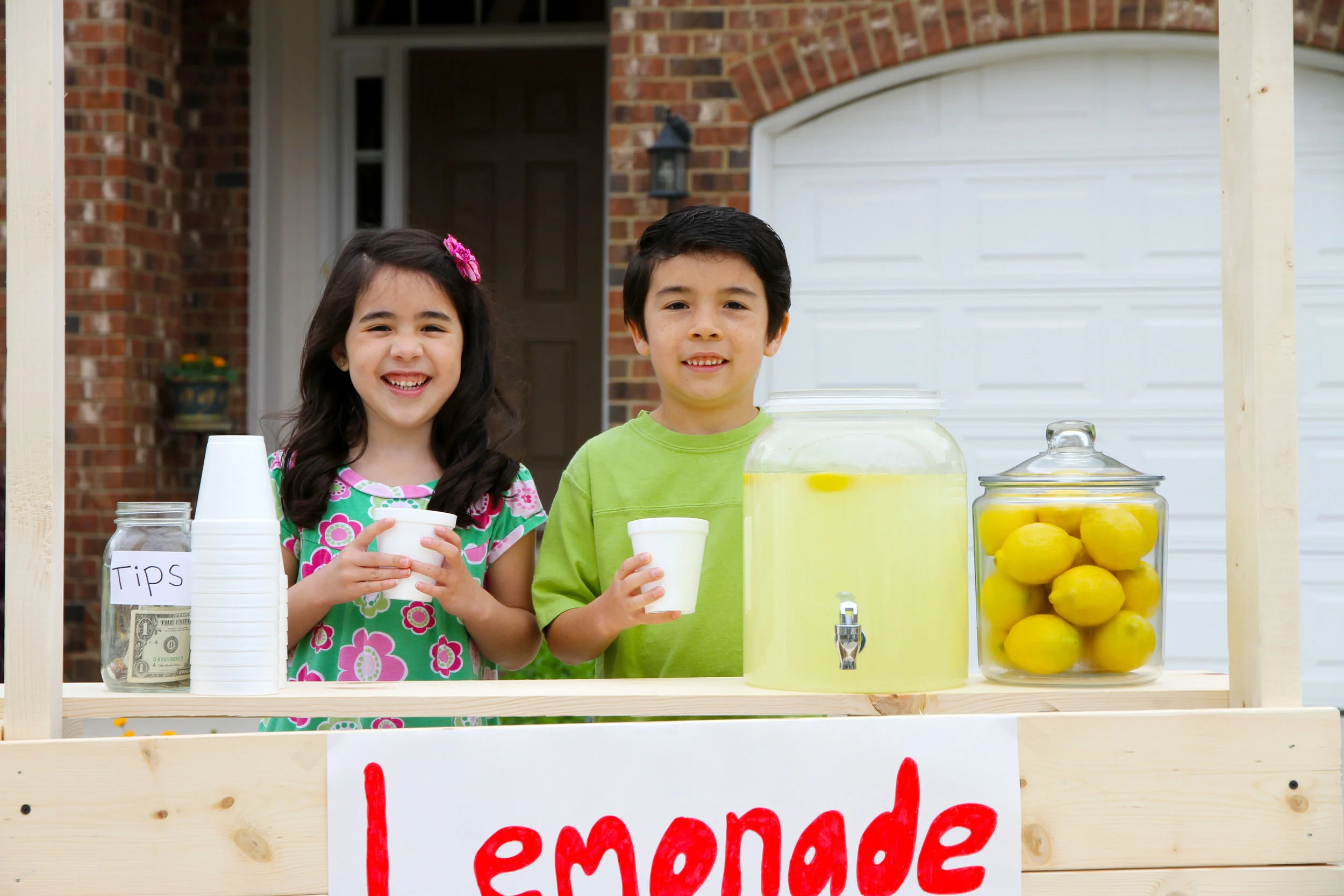
Ultimate Lemonade Stand Guide For Families
Your ultimate guide to lemonade stands for every budget, age and level of energy.
Have you ever seen headlines that read, “Effortless Lemonade Stands”, or “2001 Easy DIY Lemonade Stands”? It seems like a terrific idea until you start to do it. Then, the reality sets in that probably no lemonade stand is easy or effortless No summer is complete without the Lemonade Stand Experience. Here is a guide to 7 different ways to create a stand for your kids. Pick one that will work for your budget, time and energy. For more advanced builds, don’t forget safety goggles for everyone. And don’t forget that my age suggestions are just that, suggestions. Never leave kids unattended with tools and building materials.
Lemonade Stand Types
Lumber Cost: $100 to $350 Good For Adults and Teens Time: 6 to 8 hours
Lowe’s has a nice set of plans to build a wooden lemonade stand from plywood. Assuming you already own a cordless drill, circular saw etc., this project should be under $350. Essentially, this is a project for an adult or older teen to build for younger kids. It requires intermediate handyman skills.
Kids can join in the making more towards the end when the stand is painted and the banner and signage is created. When completed, this can be used as a puppet theatre too
Fence Pickets Cost: $25 to $50 Good For Aged 12+ Time: 1 to 2 hours
This project uses fence pickets which are screwed together to make a big rustic looking crate. There do not appear to be wheels or casters on this design, and I would add some just to make life easier when putting it in use. Because this project requires cutting with a circular saw or hand saw, it is really a project to be built by adults with help from older kids.
Wooden Crate Cost: $100-$125 Good For: Younger kids with parent Time: 1 to 2 hours
This idea uses wooden crates already made. You can find wooden crates at craft stores, Target and Walmart. It is pretty easy and requires only a small hammer and some wire nails. The fun part comes in painting the crates and making the sign or rustic banner to drape between the two poles on the sides.
Recycled Pallets Cost: $10 to $70 Good For: Older Kids with parent Time: 1 to 2 hours.
The toughest part of this project is getting the pallets themselves. If you have time and are diligent, you can likely get used wooden pallets for free from local establishments like pet stores and other businesses. Los Angeles residents may wish to contact A and I Pallets to purchase new and used pallets for their lemonade stand project.
This way of making a lemonade stand is similar to the crate version above. But pallets are larger so you are starting with bigger chunks that are already connected together. Personally, I like the super rustic and used feel that pallets bring to the table.
Table with skirt Cost: $10 to $130 Good For: Anyone Time: 15 minutes
This streamlined and simple way to have a lemonade stand is perfect for people who do not have an area to build in. Creativity can come in the making of the table skirt. Use a tablecloth or upcycled sheets and decorate with felt letters.
Antsy Pants Cost: $70 to $100 Good For: Anyone Time: 30 minutes
This is a set of pieces and connectors. Kids can build different things. These snap and click so it is easy for younger kids to build with just a little help. The cover for the lemonade stand is sold separately. So, be sure to buy both the cover and the building set. The good thing about this option is that the connectors and rods can be used over and over again to build many things like tents, trucks and more.
Upcycle old Furniture Cost: $10 to $75 Good For: Anyone Time: 2 to 3 hours
If you or your extended family have old furniture in their garage, there may be a lemonade stand just waiting to be born. Old chests of drawers, tables, carts, tv stands, small entertainment centers are all candidates. Otherwise, you can have fun shopping at flea markets or local Los Angeles gems such as Foothill Trading Company or Ocean View Thrift. You never know what great old piece you can find.
Katie is a retired teacher. She now is a maternity, baby and child photographer in Los Angeles. She specializes in Mother Child Imagery. Expecting moms to moms with adult kids are encouraged to get in touch.
3 Reasons Why Microfiber Sheets Might Be a Mom's Best Friend
When you consider the fact that humans spend around one-third of their lives sleeping, you soon realize that finding ways to increase the quality of your sleep is very important. Sleeping sufficiently and well is essential to moms who are caring for their families. One of the best ways a busy mother can help herself sleep better is to invest in a quality set of microfiber sheets.
Affordable High Quality
Microfiber sheets are made from polyester, nylon or other synthetic materials. The fiber is composed of very thin threads, and this makes them extremely soft to the touch. According to Super Comfy Sleep, compared with cotton bed linens, microfiber sheets are quite affordable. Another benefit is the fact that microfiber fabrics hold their color even through many washings, so you don't have to worry about fading. When deciding on the best microfiber sheets, you should consider the thread count, denier of the fiber and any pretreatments that might have been used on the sheets during manufacturing.
Stain-Resistant
Simply Sheets Fundraising says that microfiber products are naturally stain-resistant, promising easy cleanup after messes are made. This feature is especially helpful if you're a mom and you have little ones climbing into bed. These sheets allow for easy removal of some of the most common stains like food, spit-up, and other fluids. On many occasions, a high-quality microfiber sheet set can be washed under normal conditions without the requirement of a specialized stain removal formula. This feature is helpful because you may not notice the stain before you throw your sheets into the washer.
Long-Lasting
Microfiber sheets are made of materials that can maintain their color, texture, and integrity through many cycles of washing and drying. These sheets are easy to care for, and they can be washed and dried in your standard machines at home. They are also wrinkle-free so you won't have to spend time ironing or worry if you leave them in the dryer overnight. Due to the tight weave of the fabric in microfiber sheets, they are durable and won't tear or fray after many washes.
Microfiber sheets come in various color options and have a comfortable feel that can be enjoyed year-round. These sheets are stain-resistant and easy to care for. Consequently, they can help busy moms save time. Of course, they also promote better sleep throughout the night. High-quality microfiber sheets are ideal for any mother seeking comfortable bed linen that is low-maintenance and designed to last.
Despite the ups and downs, maternity and motherhood are such a special time of life. We create showpiece images for modern moms who want to remember everything they love about their kids, forever. Contact us with any questions you have about getting a photography session.
How to Get Rid of Pests Without Harming Children or Pets
Unwanted pests in your home can create a very stressful situation. Whether you are dealing with rodents or bugs, these uninvited guests can be very unhealthy and dangerous. Not to mention pests in large quantities is just a gross situation. Luckily, there are a number of ways that you can get rid of pests in and around your home. If you have children or pets present on the property, you may want to think about finding a way to control an infestation naturally. This will reduce exposure to dangerous chemicals.
Remove Their Habitats
In order for a large quantity of pests to be in or around your home, they must have a habitat somewhere in the vicinity. Depending on the pest that you are dealing with, the habitat could be in a variety of locations. For example, fleas love to hide in small spaces. You might find them deep within the fibers of your carpet or in the small gaps between your baseboards and flooring. And if you have furry pets, obviously that’s their favorite place to be. Ants can create nests just about anywhere, but the most common places are within walls or under flooring. Once you get rid of their home, you reduce their ability to reproduce. This will make it easier to slow down the infestation.
Use Natural Insecticides
Chemical pest products can be effective when it comes to remove pests, but these chemicals can be extremely dangerous to have around humans. Research some natural products that use things like essential oils to repel and kill pests. Some plant-based oil pest control products target neurotransmitters unique to insects, which in turn makes them safe for use around children and pets.
Keep Your Home Clean
A clean home isn’t really what pests are looking for. They’re looking for a food source, and they’re looking for a protected shelter. If you keep your home clean, remove garbage daily and wipe down surfaces when they’re messy, this will deter pests from wanting to make a home inside of your home. Don’t leave food out, keep clutter off of the floor, and make sure your pets are clean when they come into the home. Pets are one of the most common ways an infestation starts.
Some pests like moist and dark areas. If you have a very small leak in your wall or around pipes, this can attract a whole host of pests. If you know that there is a repair issue present in your home, make sure to have it addressed right away.
While it can seem overwhelming to be dealing with a pest infestation, there are ways that you can get rid of your unwanted visitors. Stick to a more natural approach if you want to make sure that your children and pets are safe during the extermination phase.
You love your kids. Preserve your memories of them at this precious time of life with a photo session from us!
Children's Songs Your Kids Will Love
Today, kids are all about media. Between videos and pics on cell phones, it is almost impossible to grab their attention in any different way. Today, I want to let you know about an album of children’s songs that can keep up with the contant competition for attention.
Tumble Bee by Laura Veirs: The Bottom Line For Children’s Songs
This is a great album that has 13 tracks and offers a substantial variety of meters, tones and sounds. Two of the tracks “Down in the Medder” and “Prairie Dream” are instrumentals. This is an attractive feature, especially if you are looking to introduce toddlers to music without any words.
Songs That Are Playful
Tumble Bee has at least three children’s songs that are “catchy”. The tune is fairly easy to pick up, “The Fox”, “Why Oh Why”, and “Little Lap Dog Lullaby” are the ones I might use in a classroom setting, or at a party to break the ice.
The Fox is a super fun song and is sure to cheer up a pouting person. It would also be a great way to start a play date if you felt your kids were shy. The song is easy to learn, is similar to Old McDonald in some ways, and catchy. Your kids will be humming to themselves in no time. This tune would also make a great song to play as you head out on a road trip.
“Why Oh Why” is set to a beat of three; a fast three, and it is fun to sing. Why can a bird eat an elephant? Why can a mouse it a streetcar? Why does a horn make music? These are a few things your kids will find out in this delightful song.
“Little Lap Dog Lullaby” is a bit of a misnomer, if you ask me. It is fun and addictive. Not something that would make most kids sleepy. Though does resemble famous lullaby lines like “Papa’s gonna buy you a mockingbird“, the pace and lyrical elements make this tune too fun to fall asleep to.
Songs That Are Fast
“Jack Can I Ride” showcases a Scott Joplin like piano accompaniment. The words are fast paced and may take a few times around to learn so your toddler can sing along. About midway through the song sports a square dance feel with fiddles and all. Be careful or you will find yourself saying “Do Si Do”.
“Soldier’s Joy” does feel like your little ones could square dance to it. While slower than the traditional square dance version, it takes pretty intense verbal skill to say the words as fast as Laura Veirs does. There is also a male voice on this song so your kids can hear both singing together.
Jamaica Farewell is included in the songs that are fast paced. In reality, it is slower than the others in this section. But I included it here because the lyrics are sung fairly quickly and may take little ones a while to learn. The calypso sway and imagery of the words makes this children’s song the right thing to do for almost any occasion.
Katie is a baby and child photographer in Los Angeles. Contact her today to book your child’s portrait session.
Why You Should Give Your Child An Allowance
Giving your child an allowance can make life easier for everyone. Find out how.
How Allowances Can Help Parents
As a teacher, I had to manage 20 plus kids all day for 180 days every year. And most of the time, this meant getting 20 people to do things they would prefer NOT to do. So how do teachers manage kids and have careers that last 20 years or more? Trust me when I say using too many words is NOT your friend. Yelling and screaming is not your friend.
Part of the way teachers get kids to do things they don’t naturally tend to do is by setting up consequences. And this is where YOU come in as a parent. This is where giving your child an allowance can help you manage them now, and in the future. The reason it works is because it builds on two key factors kids need (1) Empathy and (2) Consequences.
What An Allowance REALLY is
An allowance is something given to a family member. It is a gift. Many people believe that allowances should be earned for working around the house. In other words, paying kids to do household chores. But in my experience as a teacher, what this does is send the message that kids are not really part of the family. Being part of a team, or a family, means that certain things have to get done, for everyone. Chores are something family members are expected to do. Shopping, cleaning, homework are all things that families do. Chores are what make kids feel needed and that they are and integral part of the family. “I am part of this family, and I need to help run our life together”. That is the ultimate message chores send kids. Your kids are not service providers. They’re family. It is expected that they contribute to the success of the family’s well being.
Empathy and An Allowance
Empathy is something that is necessary for all parts of life. But ironically, it does not occur to kids to be empathetic naturally. It is a skill that has to be taught. To understand what another person feels is something we learn to do. And ultimately, being able to be empathetic leads to a happier and more productive life. It allows for more meaningful relationships. Ultimately, empathy is the key skill to happy living.
So, when you give your child an allowance, you are saying, “I understand how you feel about wanting things. I want things too. Everyone wants things. So because you are part of this family, I am going to give you X amount per week. You can save or spend your allowance as you wish (providing it is not illegal).” In doing this, you are modeling empathy. You are also setting the stage to teach how to handle life’s frustrations and realities.
Let Your Child Spend Their Allowance As They Wish
It is normal to want to put restrictions on what kids can do with their money. As grown ups, we know how hard money is to come by. But the truth is, money is one of those lessons everyone has to learn the hard way. It is almost certain you child will misallocate or spend all their money way before their next allowance pay date. When that happens, your chance to model empathy again AND teach how to deal with unpleasant consequences will arise. Here is a possible exchange that may happen:
KID: Mom, I need my allowance again. I want to buy X.
MOM: Me too. I need my paycheck again. I want to buy X. You get your allowance on Friday.
KID: No Mom, really. I need my allowance. Other moms give their kids their allowance early.
MOM: I understand about needing money. And you get your allowance on Friday.
KID: Mom, C’mon. Just this one time. I really need to buy X.
MOM: I can relate. I need to get my hair done. And you get your allowance on Friday.
If this kind of exchange continues, you can ask “What do you think my boss would say if I asked her to pay me early like this”. “What do you think you need to do so you always have money to buy things with your allowance?”
In this dialogue, you are teaching your child the value of money and the consequences of how it feels to have no money. You are also empathetic. But there is no yelling, or shaming or telling your child they should have done this or that. It is all implied. Your child is getting the message. You love them, you will pay their allowance on Friday, and you understand what it is like to run out of money. That’s a lot of life lessons being taught. So use an allowance as a way to manage behavior and show your kids how much you love them.
Some of the ideas in this blog post are from the book Love and Logic
At Panos Productions Photography, we create showpiece images for modern moms who want to remember everything they love about their kids, forever.
Why Isn't My Child Talking Yet?
As a parent, it can be frustrating and scary to realize that your child is not hitting their speech development milestones. Before you start to panic, it is important to understand some of the reasons why your child is not talking yet and what you can do to encourage this development. Here are three of the most common reasons why your child might not be talking yet:
Not Being Talked to Enough
This source recommends, “although many parents might feel silly constantly talking to a person who cannot yet talk back, the regular and persistent verbal communication that you share with your infant is imperative to their speech development. Infants respond to any kind of verbal communication, regardless of whether it is baby talk or more adult vocabulary and inflections.” Young impressionable brains are wired to soak up all of the sounds, tones, and words so that they are able to process those into a vocabulary. By being intentional about speaking with your infant from its first days of life, you will be encouraging it to develop its own language skills when the time comes.
Hearing Issues
This source explains, “one baby in a thousand is born profoundly deaf. Another two to three are born with partial hearing loss. Hearing loss is the No. 1 birth defect in America. Many studies have shown that early diagnosis of hearing loss is crucial to the development of speech, language, cognitive, and psychosocial abilities. Treatment is most successful if hearing loss is identified early, preferably within the first month of life. That's why 39 states require some type of hearing test before the baby leaves the hospital.” Common hearing problems can be negated with proper intervention, making it important to ensure that your child is tested.
Older Siblings
Oftentimes, children with older siblings are delayed in their speech capabilities. This source reports, “babies and toddlers with siblings are more likely to let the older kids speak for them, rather than talking for themselves. After a while, they will start to become dependent on the sibling to speak for them out of habit.” If your baby appears to be delayed in speech acquisition, it is a good idea to instruct any older siblings to encourage their younger brother or sister to speak up for themselves.
Take care to remove any obstacles out of your child's way when it comes to language development. By doing so, you can do your part to encourage normal patterns of speech development from a young age.
Life with children just seems to go by so fast. They may be dealing with these challenges now, but it could feel like this is only a passing second. That’s why it’s so important to take photos of your children, especially in their first couple years of life!
4 Biggest Hidden Dangers to a Child's Health
As a parent, you want your child to have the best possible upbringing. This means protecting your son or daughter from hazards that your son or daughter might encounter both at home and in the outside world. Let's take a look at a few of these potential hazards and the steps that you can take to mitigate them.
Peanuts and Seafood
Many children develop allergies at a young age, and you don’t find out until they are exposed to the allergens and they get sick. In some cases, your child could suffer negative health consequences from merely touching a surface that is contaminated by peanuts. The same could be true if your child eats, smells or touches fish or other seafood. If your child shows any signs of an allergy, take your son or daughter to the doctor immediately. It can also be a good idea to have medication handy in case of an emergency.
Mold
According to Behind the S, mold most often affects children, pregnant women, and people with breathing problems. The most common kinds of mold form in damp conditions usually present in a basement, attic or bathroom. If you see black mold, be sure to call a professional right away. It can have an adverse impact on your child's life, and it can also put your own life in danger.
Falling Objects
A blow to the head can cause significant injury to a small child because its skull and brain are not fully developed. This can be true even if the object falls from a relatively low height. To prevent your child from being hit by a falling object at home, keep items on shelves secured with zip ties or similar objects. You can also keep potentially dangerous objects in a shed or other space the child won't occupy.
The Family Pet
You should never leave your child unsupervised when feeding, playing with or otherwise interacting with a cat or dog. This is because even a friendly animal can get scared or angry in an instant, and it could lead to your child being bitten or experiencing other injuries in an attack. According to American Family Physician, dog bites account for 1% of all injury-related emergency department visits in the United States and more than $50 million in inpatient costs per year. Immediate treatment will be necessary to stop the spread of bacteria throughout the child's body.
Children are often curious about the world around them and can be oblivious to the potential consequences of their actions. Therefore, it is important that they are properly supervised to ensure that they don't get hurt. Taking proactive steps to mitigate hazards can also make it easier to keep your kids safe when you can't watch them.
Panos Productions creates showpiece images for modern moms who want to remember everything they love about their kids forever. Book a beautiful photo session with us today.